Thailand remains the most accessible and versatile international getaway for Indian travelers. With non-stop direct flights in under 4 hours, 60-day visa exemption, and high purchasing power for the Indian Rupee, planning your trip from India is straightforward.

Trail With Ease Pro-Tip
Book direct flights 6 to 8 weeks ahead of travel, always select "Pay in THB" at card terminals to avoid Dynamic Currency Conversion fees, and download Grab or Bolt apps to bypass airport taxi haggling.
Thailand remains one of the most accessible international getaways for Indian travellers — direct flights from six major Indian cities in under five hours, a currency that still stretches further than a comparable domestic holiday, and an entry process that, even with the rule change coming this month, stays genuinely simple.
This guide covers what actually changes trip planning: the new visa rules, realistic costs in INR, which parts of the country suit which kind of trip, and the mistakes that repeatedly trip up first-time visitors.
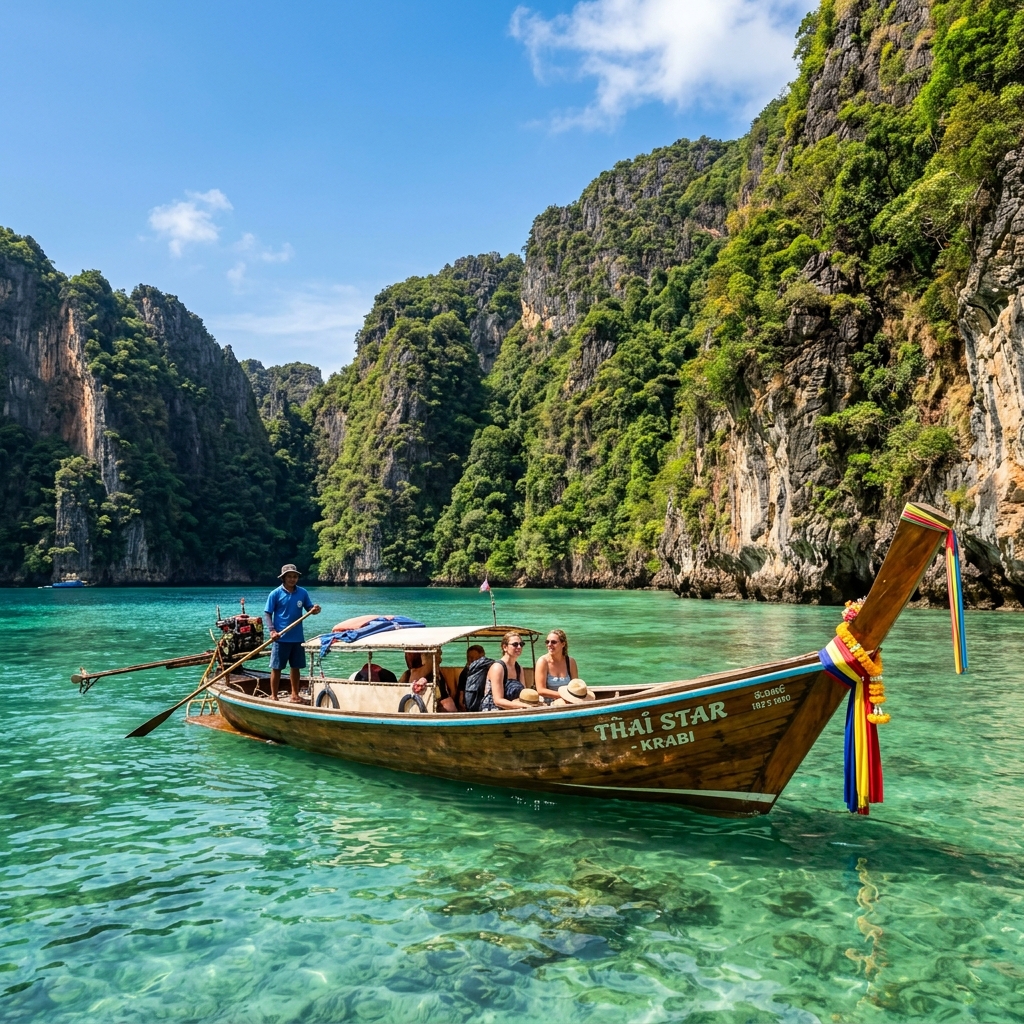
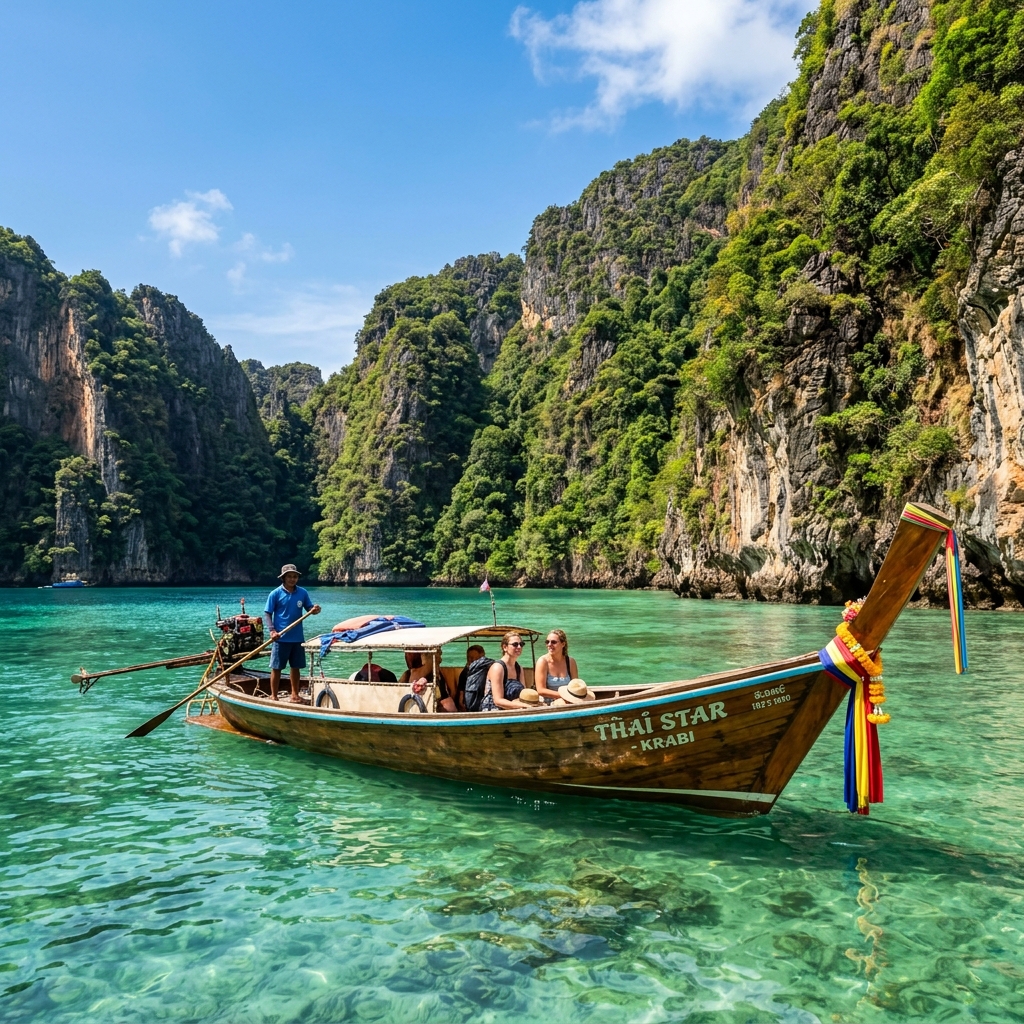
Classic Thai longtail boat floating on emerald waters against dramatic limestone karst cliffs
- ⚡ Thailand at a Glance
- ✈️ Visa & Entry Requirements
- ☀️ Best Time to Visit & Weather
- 💰 Currency & Exchange Rates
- 🏷️ Trip Cost Breakdown (INR)
- 🛫 Flights & Airport Transit
- 🌴 Best Places to Visit
- 🧭 Which Destination Fits You
- 🗓️ Recommended Itineraries
- 🗺️ Day Trips from Bangkok
- 🚆 Local Transport Guide
- 🍲 Food for Indian Travellers
- 🛡️ Safety & Common Mistakes
- 🐘 Responsible Travel
- 💡 Practical Tips
- 📋 Final Checklist
- ❓ FAQ
Thailand at a Glance: Quick Planning Overview
| Planning Parameter | Details for Indian Travellers |
|---|---|
| Country & Capital | Kingdom of Thailand | Capital: Bangkok |
| Official Currency | Thai Baht (THB) | Baseline Rate: 1 THB ≈ ₹2.45–₹2.50 |
| Time Difference | Thailand (ICT) is 1 hour 30 minutes ahead of India (IST) |
| Entry Status (from 15 Sept 2026) | 30-day visa exemption for Indian tourist passport holders |
| Direct Flight Duration | 2.5 hours from Kolkata to 4.5 hours from Delhi/Mumbai/Bengaluru |
| Main International Hubs | Bangkok Suvarnabhumi (BKK), Bangkok Don Mueang (DMK), Phuket (HKT) |
| Recommended Trip Duration | 7–10 days for a balanced two-region itinerary |
| Peak Tourist Season | November to February (cool and dry across most of the country) |
Thailand Visa & Entry Requirements for Indian Travellers (2026)
This is the section that's changed most since our last update, so read it carefully if you're booking now.
The Rule Change: 60 Days Becomes 30 Days on 15 September 2026
Thailand's Ministry of Interior published revised entry rules in the Royal Gazette on 31 August 2026, cutting the general visa exemption from 60 days to 30 days. The change takes effect 15 September 2026.
What this actually means for you:
- If you enter Thailand on or before 14 September 2026, you still receive the full 60-day exemption, even if part of your trip runs past the cutoff date.
- If you enter on or after 15 September 2026, you receive a 30-day exemption instead. India remains on the list of eligible countries — the length of stay is what's changing, not eligibility itself.
- The one-time extension at a Thai immigration office still applies: an additional 30 days for a fee of ฿1,900, meaning a maximum stay of 60 days under the new rules (versus 90 days previously).
- The change is specifically about the general tourist exemption. It doesn't affect visa-on-arrival, which India is one of only four remaining eligible countries for under the revised framework.
If your trip is more than 30 days and starts after 15 September, plan for either the extension fee or apply for a Tourist Visa (TR) in advance through Thailand's e-Visa system rather than relying on the exemption alone.
Mandatory Entry Documents & Airport Customs Checklist
Whichever exemption period applies to your trip, you'll need the same documents ready at immigration in Bangkok, Phuket, or wherever you land:
- Passport validity: at least 6 months remaining from your date of arrival, with two blank pages.
- Confirmed return or onward flight ticket, departing within your permitted stay window. Open-ended tickets are routinely rejected at airline check-in.
- Thailand Digital Arrival Card (TDAC), completed online at tdac.immigration.go.th within 72 hours of arrival. It's free and replaces the old paper TM6 form. Save the QR code it generates.
- Proof of accommodation — hotel booking confirmations are usually sufficient.
- Proof of funds: immigration guidance calls for at least 10,000 THB per person (around ₹25,000) or 20,000 THB per family, in cash or a verified forex balance. Checks are selective but not guaranteed to be skipped.
On the proposed 300 baht arrival fee: this has been discussed and delayed multiple times since 2023 and, as of this update, still hasn't been formally implemented. Don't budget for it yet, but don't be surprised if it appears — check closer to your travel date.
Best Time to Visit Thailand: Regional Weather Breakdown
Thailand's weather isn't one season — it's at least three, running on different calendars depending on which coast you're headed to. Getting this wrong is one of the most common planning mistakes, because the two main beach regions have opposite monsoon patterns.
Bangkok & Central Thailand
Warm year-round. November to February brings lower humidity and is best for walking temple tours and night markets. March to May climbs to 35–38°C. June through October brings daily afternoon monsoon showers.
Phuket & Krabi (Andaman Coast)
Dry season runs November through April — calm seas, reliable island-hopping to Phi Phi or Maya Bay. The Southwest Monsoon brings rough seas and heavy rain from late May to October, and some marine parks close temporarily during the wettest stretch.
Koh Samui & the Gulf Coast
Runs on a different calendar entirely. The Gulf side stays comparatively dry from January through August, so if you're travelling in July or August — a common window for Indian family trips around summer holidays — Koh Samui and its neighbouring islands are the better bet than Phuket. The Gulf's wettest stretch is October to November, which is exactly when the Andaman coast is at its driest.
Chiang Mai & Northern Highlands
Cool, pleasant winters from November to February, with valley evenings dropping to 15–18°C — pack a layer if you're coming from anywhere warm in India. March and April are the region's hot, hazy burning season (more on this below). June to October brings monsoon rain but also the greenest scenery of the year.
| Region | Peak Dry Season | Shoulder | Monsoon / Rainy Window |
|---|---|---|---|
| Bangkok & Central | Nov–Feb | Mar–May (warm) | Jun–Oct |
| Phuket & Krabi (Andaman) | Nov–Apr | May & Oct | Jun–Sep |
| Koh Samui (Gulf Coast) | Jan–Aug | Dec | Oct–Nov |
| Chiang Mai (North) | Nov–Feb | Jun–Aug (green) | Mar–Apr (burning season) |
One thing worth knowing if Chiang Mai is on your list: northern Thailand has a "burning season" roughly February to April, peaking in March, when agricultural burning drives up air pollution significantly. If temple-hopping and mountain views are the point of visiting Chiang Mai, this isn't the ideal window — November to February gives you the same city with clearer air.
Thailand Currency Guide: THB to INR Exchange & Smart Money Hacks
The national currency is the Thai Baht (THB), symbol ฿, and it's straightforward to manage once you know the baseline conversion.
Current Exchange Rate & Mental Math Rule
As of this update, the working range is:
1 THB ≈ ₹2.45 to ₹2.501 INR ≈ 0.40 to 0.41 THB- Quick rule: multiply any THB price by 2.5 to get a rough INR figure. A 200 THB plate of Pad Thai is roughly ₹500.
THB to INR Conversion Table for Common Amounts
| Thai Baht Amount | Approx. INR | Typical Use |
|---|---|---|
100 THB |
~₹245–250 | Street food meal, tuk-tuk ride, fresh coconut |
500 THB |
~₹1,225–1,250 | Mid-range dinner, major attraction entry |
1,000 THB |
~₹2,450–2,500 | 1-hour Thai massage, speedboat tour deposit |
5,000 THB |
~₹12,250–12,500 | Boutique hotel night, multi-day shopping budget |
Cash, Cards & ATM Withdrawal Hacks
- Carry small bills. Street stalls, BTS ticket machines, and tuk-tuk drivers regularly can't break a 1,000 THB note — keep a stock of 20s, 50s, and 100s.
- Always select "Pay in THB" at card terminals, not INR. Choosing your home currency triggers Dynamic Currency Conversion, a 3–5% markup most travellers don't notice until they check their statement.
- ATM withdrawals carry a flat foreign-card fee of around 220 THB (~₹550) per transaction regardless of amount, so withdraw larger sums less often rather than small amounts repeatedly.
- Avoid exchanging INR to THB at Indian airports — the rates are poor. Either carry USD (50s and 100s) or exchange directly in Bangkok at a reputable licensed changer such as SuperRich.
How Much Does a Thailand Trip from India Cost?
The total spend depends heavily on travel tier and how many regions you're combining. Here's a realistic per-person breakdown for a 7-day trip:
| Expense Category | Budget Solo (INR) | Mid-Range / Couple (INR) | Luxury (INR) |
|---|---|---|---|
| Return Flights (Metro Hub to BKK/HKT) | ₹18,000–24,000 | ₹24,000–32,000 | ₹45,000–70,000+ |
| 7-Night Accommodation | ₹7,000–12,000 | ₹18,000–35,000 | ₹60,000–1,20,000+ |
| Food & Dining (7 days) | ₹5,000–8,000 | ₹12,000–20,000 | ₹30,000–55,000+ |
| Local Transport & Transfers | ₹3,000–5,000 | ₹7,000–12,000 | ₹18,000–30,000 |
| Sightseeing & Island Tours | ₹4,000–7,000 | ₹10,000–16,000 | ₹25,000–45,000 |
| Total per Person | ₹37,000–56,000 | ₹71,000–1,15,000 | ₹1,78,000–3,20,000+ |
Is Thailand Expensive Compared to a Domestic Holiday?
Roughly on par with — or only slightly above — a premium domestic trip to Goa, the Andamans, or Kerala. Flights are the bigger upfront cost, but on the ground, Thailand often works out cheaper:
- A 4-star boutique hotel or beach resort in Bangkok or Phuket with a pool and breakfast runs ₹3,500–6,000 a night — similar to what basic accommodation costs in an Indian metro during peak season.
- Street food classics (Pad Thai, mango sticky rice, Tom Yum) run 60–120 THB (~₹150–300); a proper sit-down meal averages ₹600–1,000 per head.
- A 60-minute Thai massage costs 250–400 THB (~₹600–1,000).
Flights from India to Thailand: Routes, Transit & Airports
Non-stop flights run daily from most major Indian cities, and booking 6–8 weeks out generally gets the best fares.
| Origin Hub (India) | Destination | Average Direct Duration |
|---|---|---|
| Kolkata (CCU) | Bangkok (BKK/DMK) | ~2h 30m |
| New Delhi (DEL) | Bangkok / Phuket | ~3h 45m – 4h 30m |
| Mumbai (BOM) | Bangkok / Phuket | ~4h 15m |
| Bengaluru (BLR) / Chennai (MAA) | Bangkok (BKK/DMK) | ~3h 30m |
| Hyderabad (HYD) / Kochi (COK) | Bangkok (BKK/DMK) | ~3h 45m |
BKK vs. DMK: Which Bangkok Airport?
Suvarnabhumi (BKK) is Bangkok's main hub, serving Air India, Thai Airways, Vistara, and select IndiGo routes. The Airport Rail Link connects to Phaya Thai Station (BTS interchange) for 45 THB in about 30 minutes. Metered taxis from Level 1 add a 50 THB surcharge plus highway tolls (~75 THB) on top of the metered fare.
Don Mueang (DMK) handles low-cost carriers — Thai AirAsia, Nok Air, Thai Lion Air. The SRT Red Line runs to Bang Sue Grand Station, or the A1/A2 airport bus (30 THB) reaches Mo Chit BTS station.
Check which airport your specific flight uses before booking onward transport — it's a common source of confusion for first-time arrivals.
Flight Cost Ranges
- Full-service (Air India, Thai Airways, Vistara): ₹24,000–36,000 round-trip, including checked baggage and meals.
- Low-cost (IndiGo, Thai AirAsia, SpiceJet): ₹17,000–23,000 base fare during sales — add baggage and meals separately or pay more at the airport counter.
Best Places to Visit in Thailand: Destination Comparison
Nine of these come up often enough in trip planning to deserve individual coverage. Rather than treating them as a checklist, each entry answers who it actually suits.
Bangkok: Shopping, Temples & Street Food
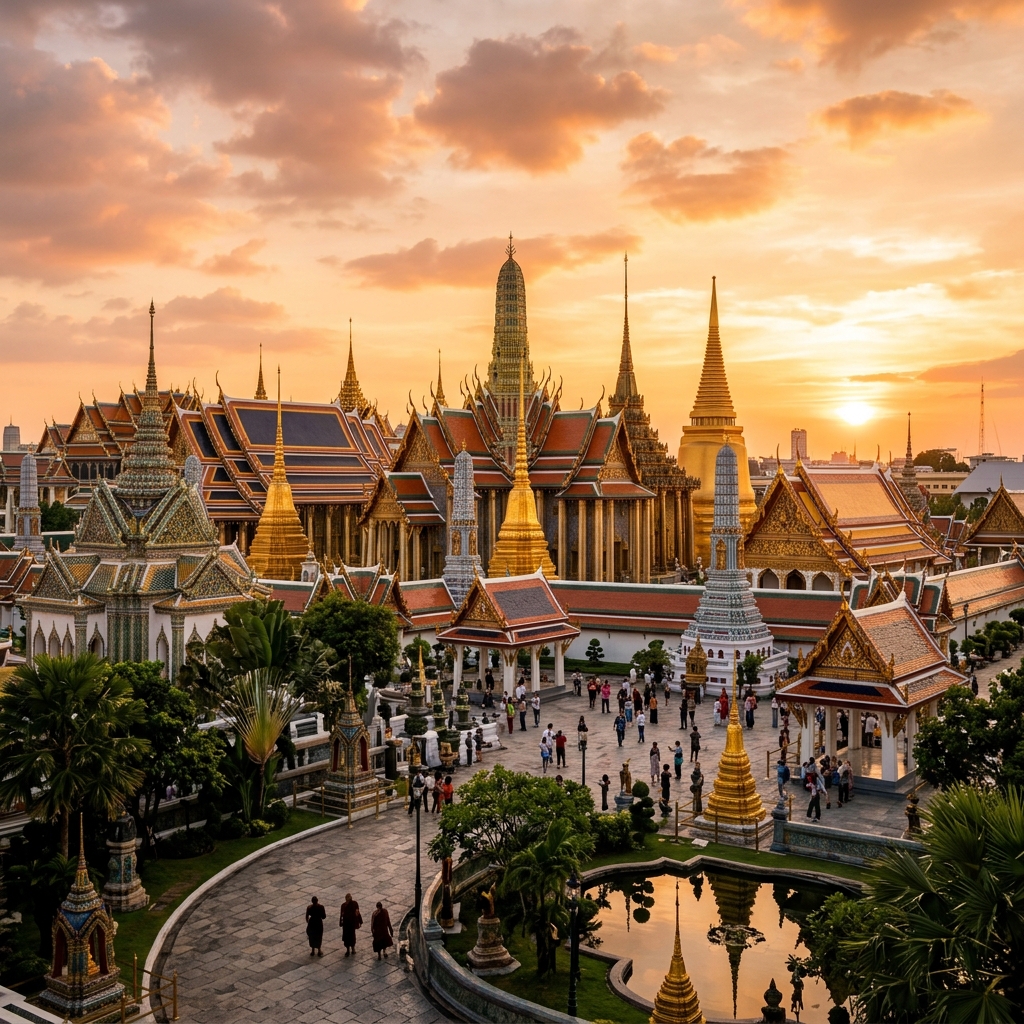
Golden spires of the iconic Grand Palace in Bangkok gleaming during golden hour
Bangkok is Thailand's entry point for almost everyone, and it earns its reputation as an energetic, occasionally overwhelming capital. For deeper coverage of transit, hotels and night markets, see our Bangkok Travel Guide for Indian Tourists.
- Best for: first-time visitors, temple sightseeing, shopping, street food, short stopovers.
- Recommended stay: 2–3 days is enough to see the highlights without rushing; longer if shopping and markets are the priority.
- Trade-off: traffic and heat can make sightseeing tiring in the hot season; the BTS and MRT largely solve this if you stick close to a station.
- Highlights: Wat Arun, Wat Phra Kaew & the Grand Palace, Wat Pho, Platinum Fashion Mall, Chatuchak Weekend Market.
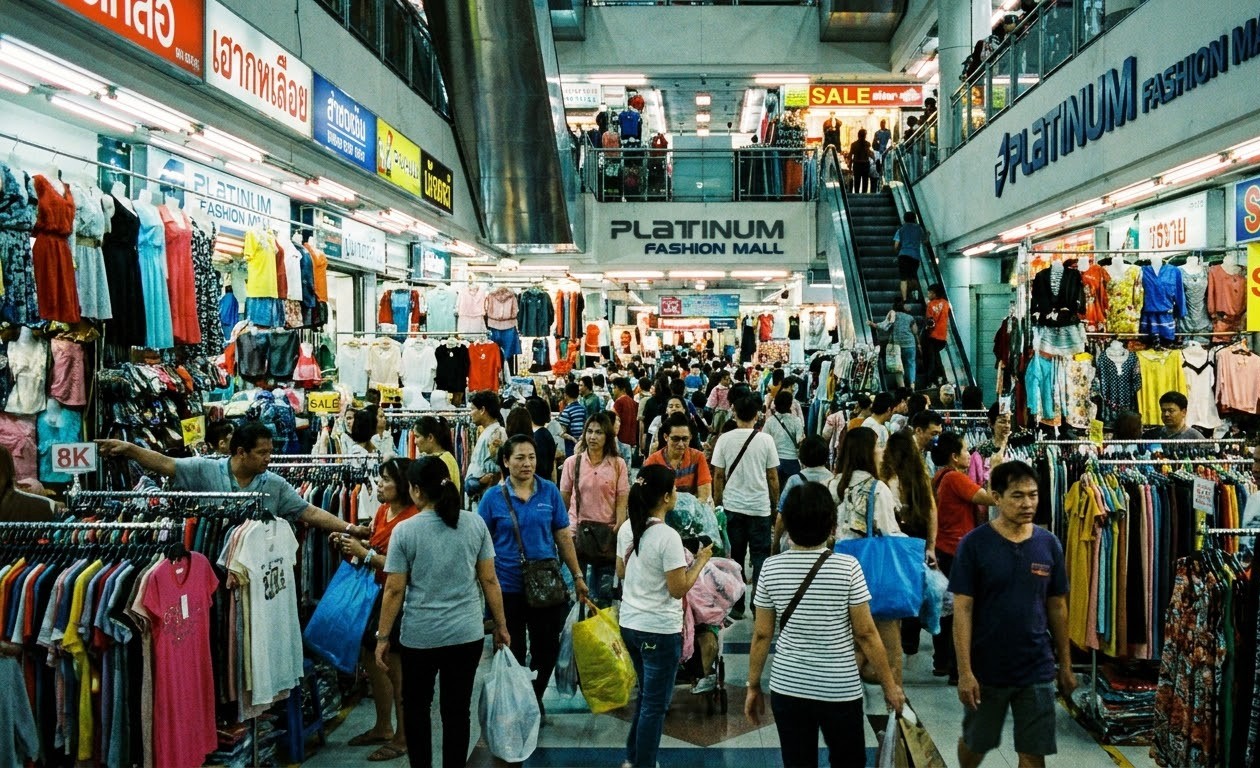
Wholesale retail fashion bazaar inside Platinum Fashion Mall in Pratunam, Bangkok
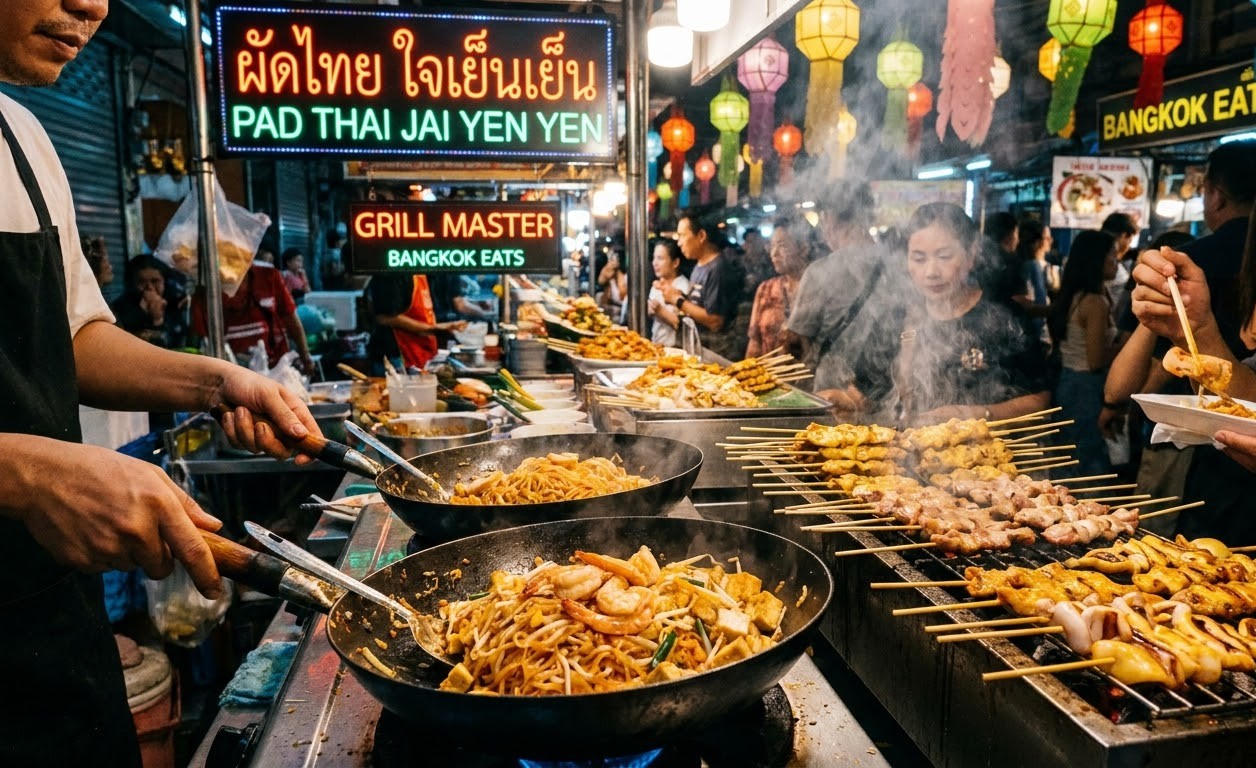
Freshly cooked Pad Thai and street food delicacies at a bustling Bangkok night market
Pattaya: Coastal Resort & Entertainment Hub
150km (a 2-hour drive) southeast of Bangkok, and usually tacked onto a Bangkok trip rather than visited alone.
- Best for: budget coastal add-ons, families wanting a beach day without a flight, cabaret shows, water sports at Coral Island.
- Recommended stay: 1–2 days — it doesn't reward a longer stay the way Phuket or Krabi do.
- Trade-off: the beaches themselves aren't Thailand's best; the appeal is proximity to Bangkok and ease of access, not scenery.
- Highlights: Sanctuary of Truth, Coral Island (Koh Larn) day trip, Nong Nooch Tropical Garden.
Phuket: Beaches, Resorts & Nightlife
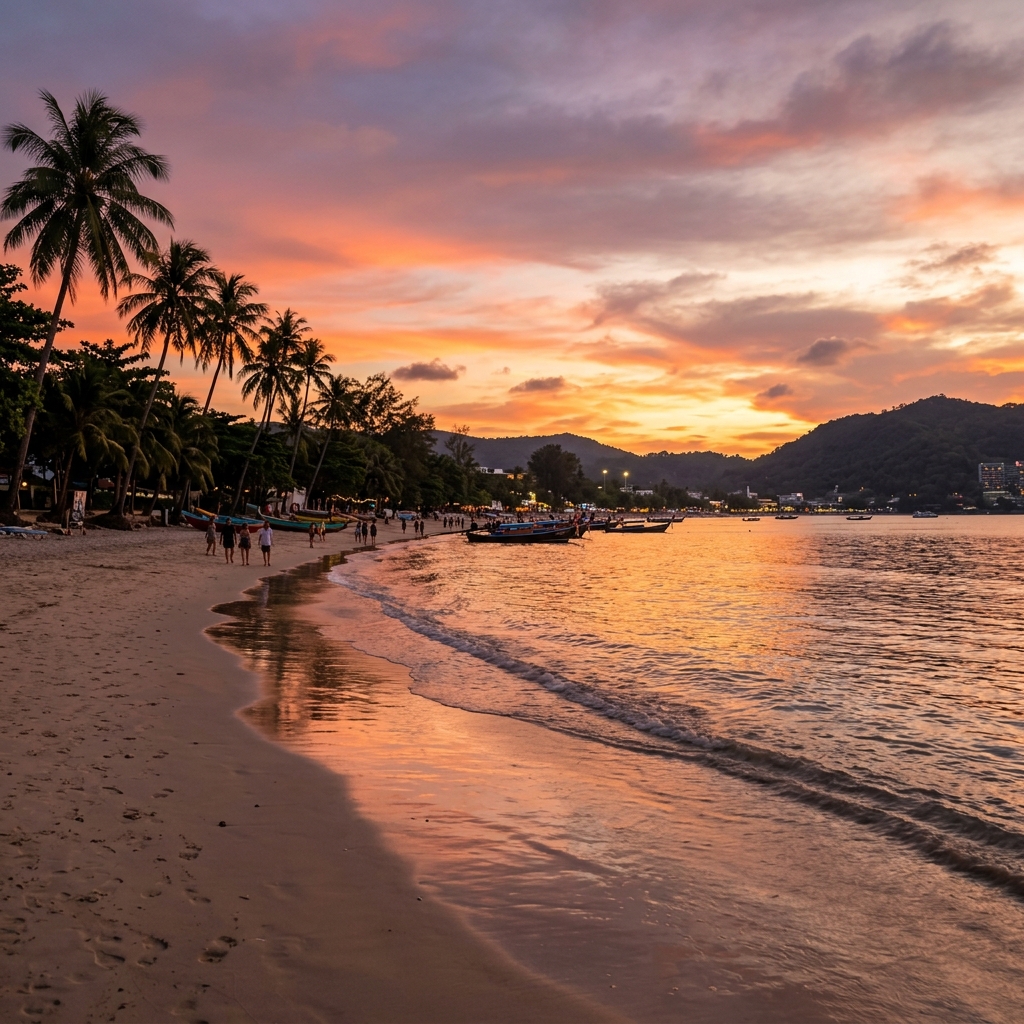
Patong Beach in Phuket, featuring a broad sandy coastline and vibrant sunset views
Thailand's largest island and its most developed beach destination — a genuine first trip works here precisely because everything (hospitals, English-speaking staff, direct flights, family-friendly resorts) is easy to find. For hotel-level detail and day trips, see our Phuket Travel Guide.
- Best for: first-time beach visitors, families, resort-style holidays, easy access to day trips.
- Recommended stay: 3–4 days.
- Who might prefer somewhere else: travellers wanting quieter, less commercial beaches — Krabi or Koh Lanta suit that better.
- What it combines with: works well as a 3–4 day add-on to a Bangkok trip; a direct domestic flight from Chiang Mai also connects the two regions in about 90 minutes.
- Highlights: Patong, Kata and Karon beaches, Old Phuket Town, Big Buddha, day trips to Phi Phi Islands and James Bond Island.
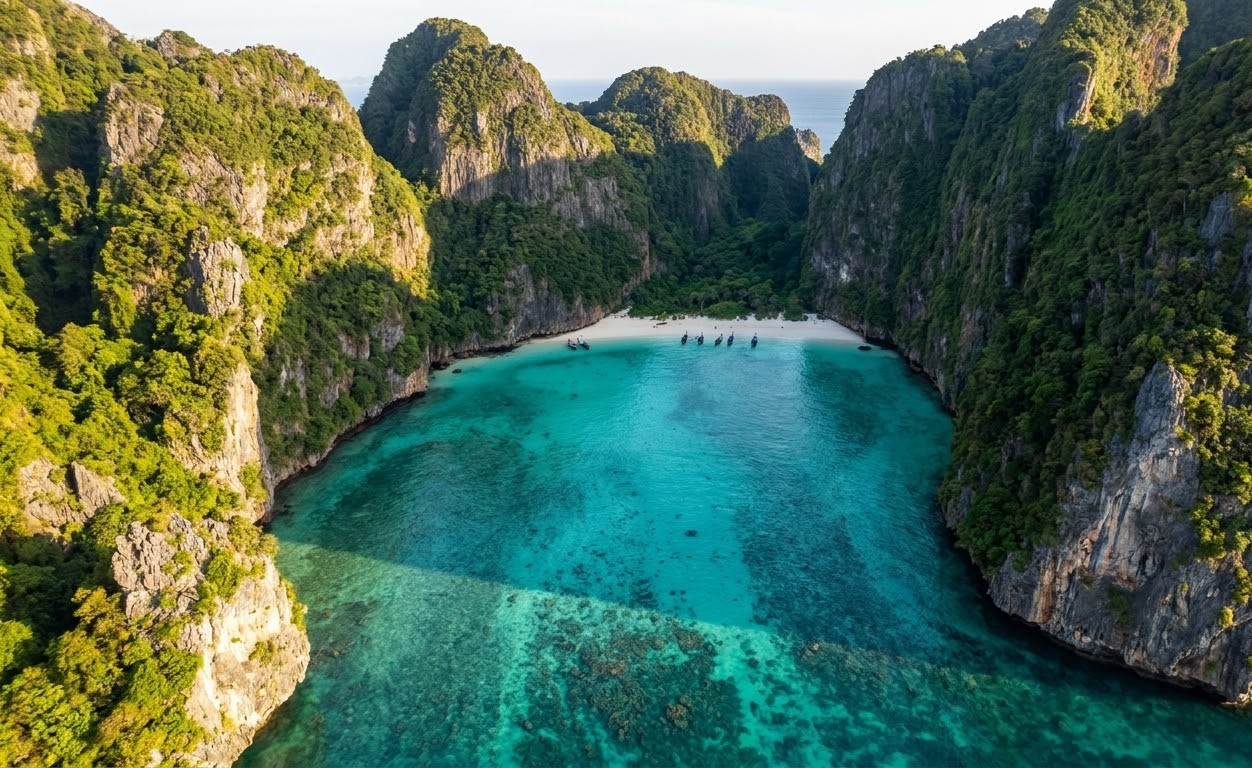
Maya Bay in the Phi Phi Islands, famous for towering limestone cliffs and clear turquoise waters
Krabi: Limestone Cliffs, Railay Beach & Island Hopping
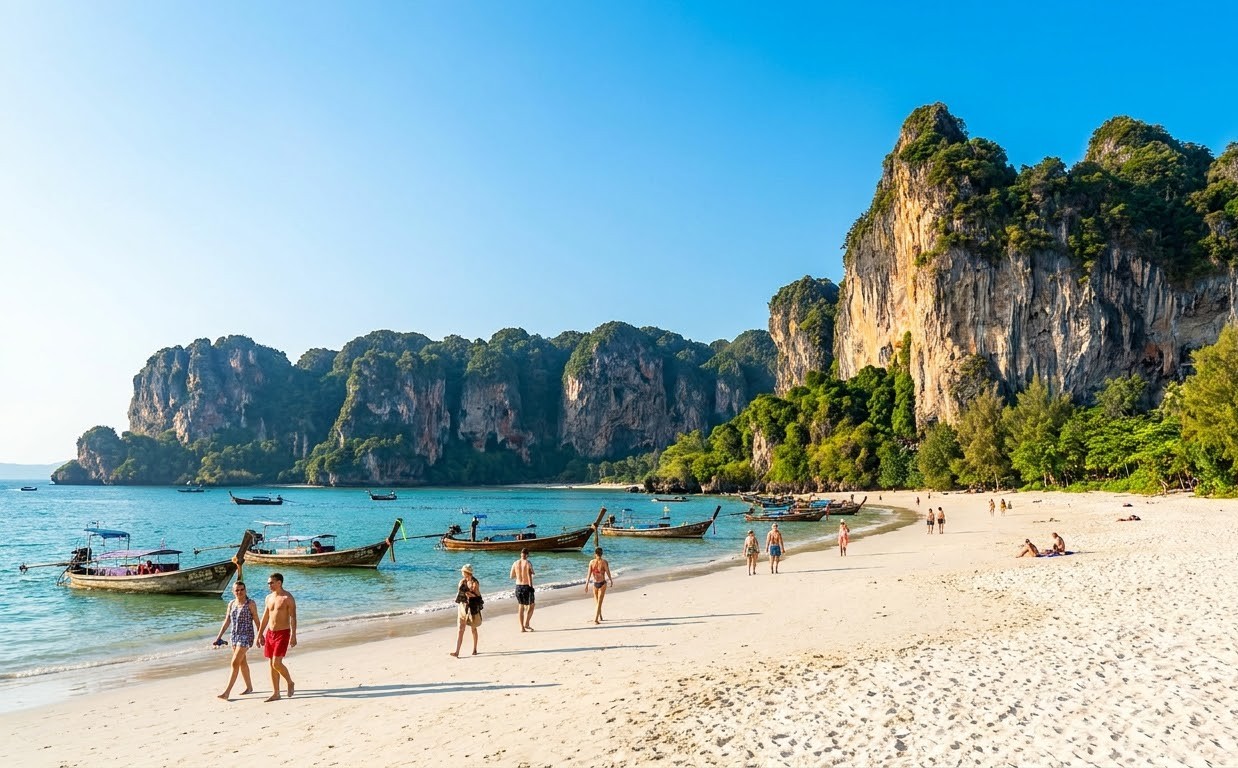
Railay Beach in Krabi, accessible only by longtail boat due to surrounding limestone cliffs
Krabi trades Phuket's polish for dramatic scenery — towering limestone karsts, mangroves, and a noticeably quieter pace. See our Krabi Travel Guide for planning Railay Beach and the Emerald Pool.
- Best for: couples, nature-focused travellers, rock climbing, a slower island-hopping pace than Phuket offers.
- Recommended stay: 2–3 days.
- Trade-off: less nightlife and fewer big-brand resorts than Phuket — a deliberate choice, not a shortcoming, depending on what you want.
- Highlights: Railay Beach (boat access only), Ao Nang, the 4-Islands speedboat tour, Emerald Pool, Tiger Cave Temple.
Chiang Mai: Lanna Culture, Temples & Elephant Sanctuaries
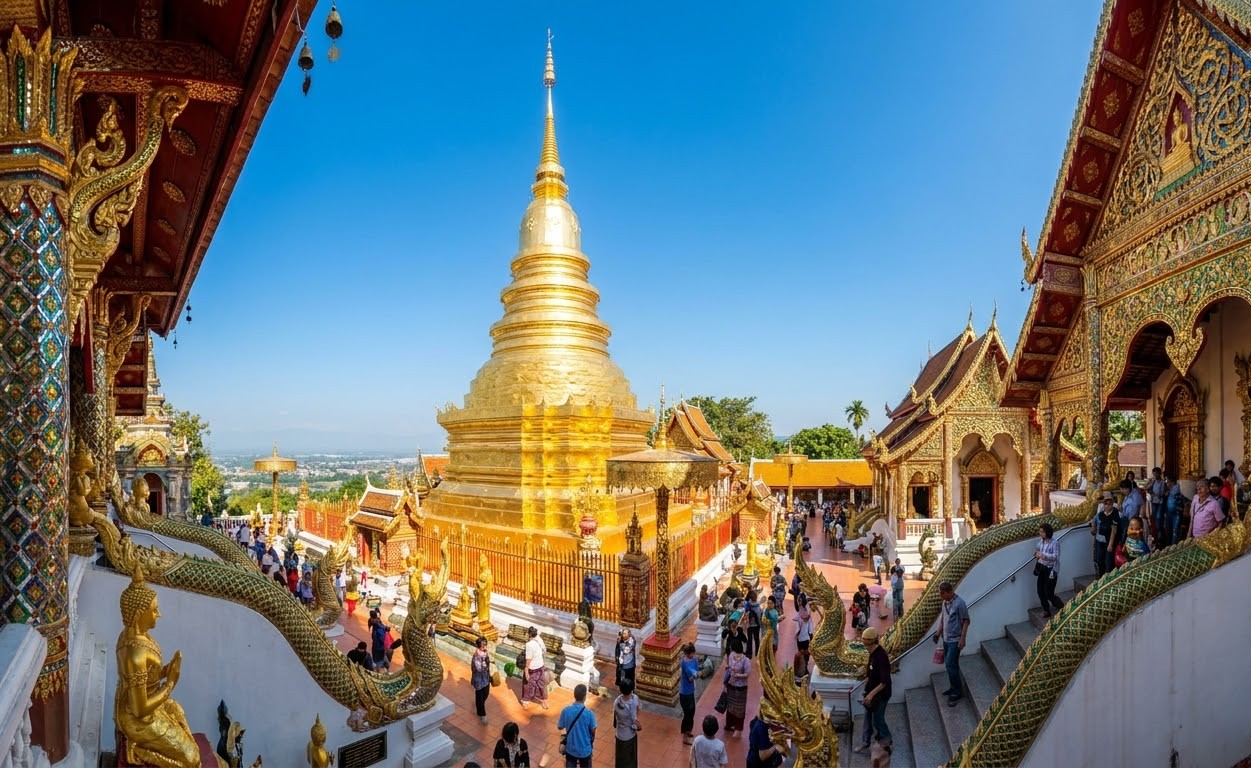
The golden chedi of Wat Phra That Doi Suthep overlooking Chiang Mai valley
The cultural counterweight to Thailand's beaches — cooler mountain air, Lanna-era temples, and the country's main hub for ethical elephant encounters.
- Best for: cultural travellers, cooler weather, temple-hopping without beach crowds, multi-generational trips where older travellers want a gentler pace than an island.
- Recommended stay: 3 days.
- Trade-off: no beach, and it's a flight (not a day trip) from Bangkok — budget at least an hour each way.
- Highlights: Wat Phra That Doi Suthep, the Night Bazaar, Elephant Nature Park, Doi Inthanon National Park.
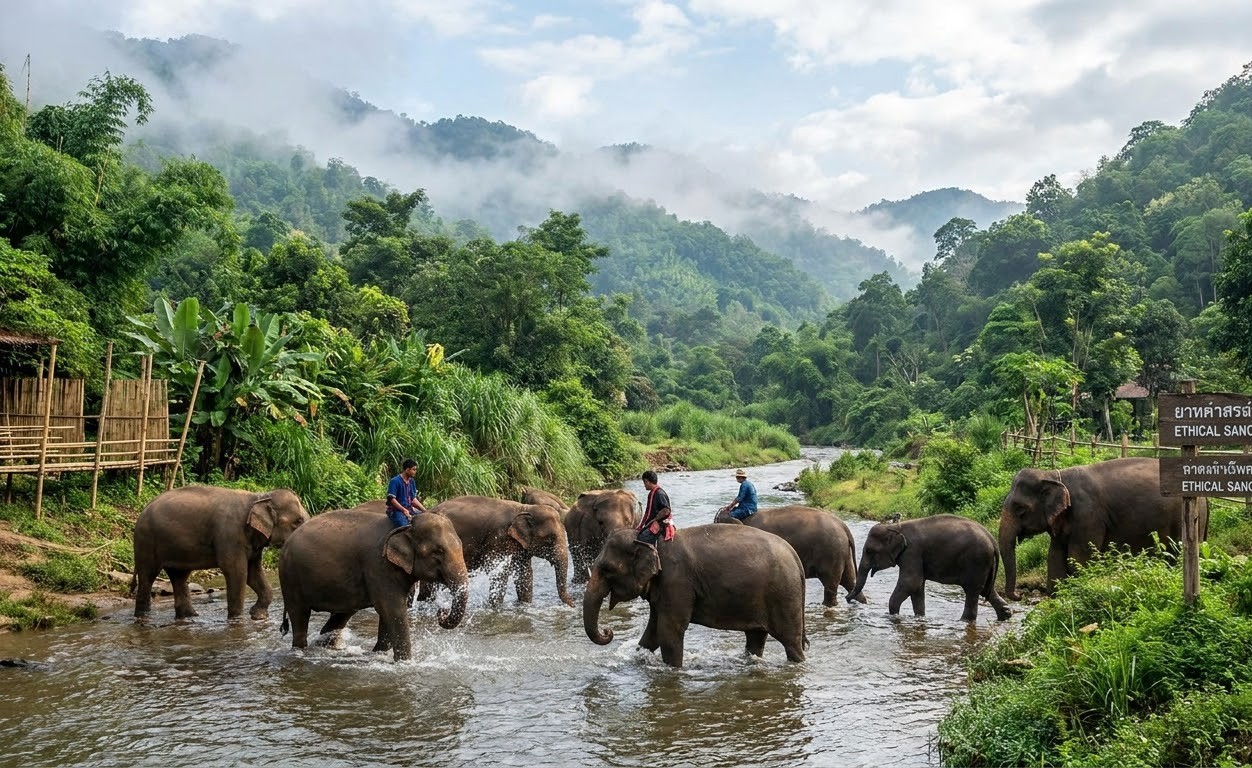
Rescued Asian elephants enjoying a natural river bath at an ethical sanctuary in Chiang Mai
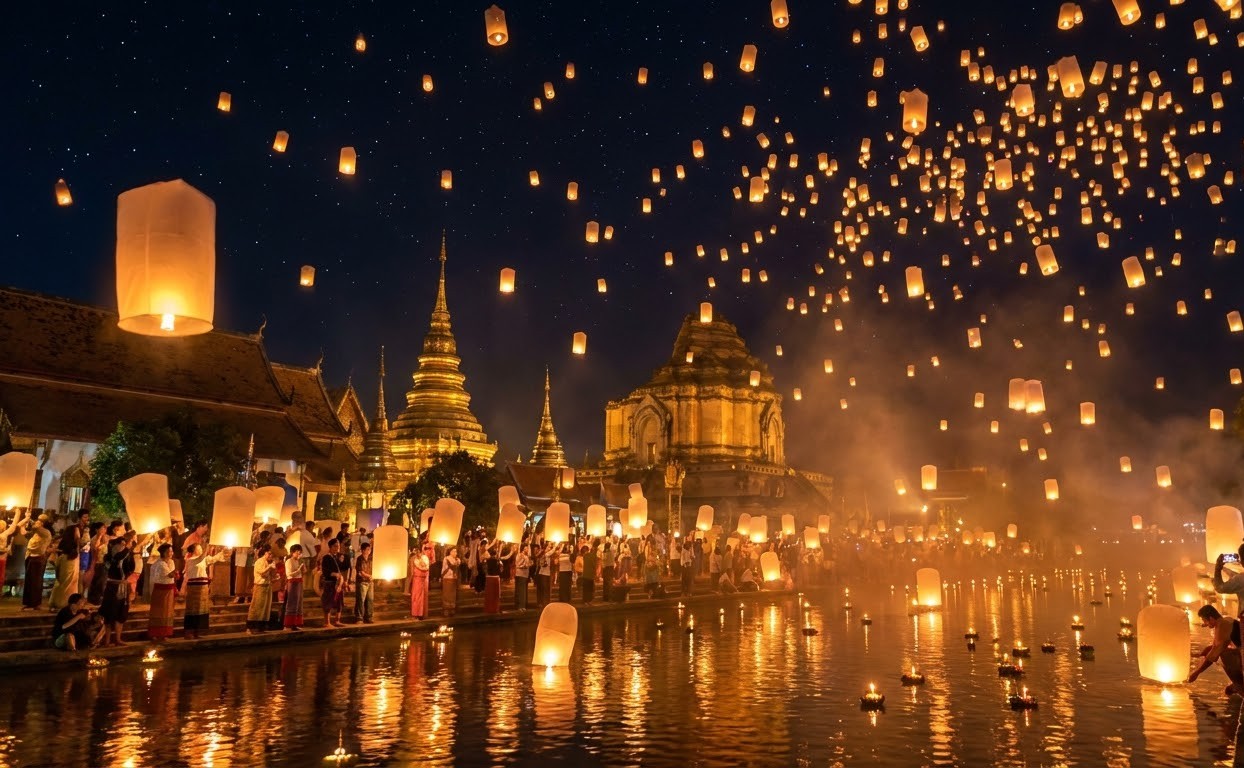
Glowing lanterns drifting into the night sky during the annual Yi Peng festival in Chiang Mai
Koh Samui: The Gulf's Easiest Island
Samui has its own airport, making it the most accessible of the Gulf islands, and it leans toward resorts and family travel rather than backpacker energy.
- Best for: families and couples wanting an easy, well-resourced beach base; travellers visiting in July–August when the Andaman coast is wet.
- Recommended stay: 3 days.
- Trade-off: it's the most developed and commercial of the Gulf islands — if you want something quieter, Koh Phangan's non-party side or Koh Tao suit better.
- What it combines with: Koh Phangan and Koh Tao are both a short ferry away, making a Gulf-islands-only trip easy to build without flying between each stop.
Koh Phangan: More Than the Full Moon Party
Koh Phangan's reputation is dominated by the monthly Full Moon Party at Haad Rin, and that reputation is only half the story. Travellers who've stayed on the island report a genuinely different experience depending on where you base yourself and when you visit — busy and loud around Haad Rin during the party, noticeably quieter and more scenic everywhere else.
- Best for: younger travellers wanting the Full Moon Party specifically; also — away from Haad Rin — couples and travellers who want a quieter, less developed island than Samui.
- Who might prefer somewhere else: anyone who wants to avoid nightlife entirely should time their visit away from the Full Moon Party dates, or base themselves on the opposite side of the island.
- Recommended stay: 2–3 days.
- A genuine safety note: if you do attend the Full Moon Party, don't buy drugs from unknown sellers on the beach — this is one of the more consistently repeated warnings from people who've spent time on the island, and Thailand's penalties for drug offences are severe.
Koh Tao: Diving on a Budget
The smallest of the well-known Gulf islands and the one most built around a single activity: diving.
- Best for: first-time scuba certification (among the most affordable places in the world to get PADI-certified) and experienced divers chasing specific dive sites.
- Recommended stay: at least 4 days if you're doing a certification course, since Open Water courses run about 4 days start to finish.
- Trade-off: less to do if diving isn't the draw — food and nightlife options are noticeably thinner than Samui or Phangan.
- A practical note: dive shop pricing is fairly standardised island-wide, so it's worth comparing group sizes rather than price — smaller instructor-to-student ratios (4 or fewer) are generally safer than shops running groups of 8–10.
Master Destination Comparison Matrix
| Destination | Best Suited For | Ideal Stay | Primary Character |
|---|---|---|---|
| Bangkok | Shopping, temples, street food, first stop | 2–3 days | Vibrant, fast-paced capital |
| Pattaya | Budget coastal add-on, entertainment | 1–2 days | Accessible, busy nightlife |
| Phuket | Resorts, families, easy beaches | 3–4 days | Popular, developed beach hub |
| Krabi | Scenery, couples, climbing | 2–3 days | Relaxed, dramatic coastline |
| Chiang Mai | Culture, temples, cooler climate | 3 days | Historic northern hub |
| Koh Samui | Families, easy Gulf-coast base | 3 days | Developed, resort-heavy island |
| Koh Phangan | Party (Full Moon) or quiet escape | 2–3 days | Split personality by location |
| Koh Tao | Diving, budget certification | 3–4 days | Small, activity-focused |
Which Destination Fits You?
The comparisons that actually change a booking decision, based on what first-time planners tend to get stuck on:
Phuket vs Krabi. Choose Phuket if this is a first international trip and you want resorts, restaurants, and hospitals all easy to find without research. Choose Krabi if scenery and a quieter pace matter more than convenience — Railay Beach and the limestone cliffs are genuinely more dramatic than anything on Phuket itself.
Koh Samui vs Koh Phangan vs Koh Tao. Samui for families and an easy resort stay. Phangan for the Full Moon Party specifically, or for a quieter island if you avoid Haad Rin and party dates. Tao for diving — it's a poor choice if diving isn't the point of the trip, since there's comparatively little else to do.
Bangkok vs Chiang Mai (if you can only pick one add-on to a beach trip). Bangkok if this is your first Thailand trip and you want the most iconic sights and shopping in one stop. Chiang Mai if you've done Bangkok before, or if cooler weather and temple culture without crowds matters more than a capital city's energy — but skip Chiang Mai during the March–April burning season if air quality is a concern.
What not to combine in a short trip. A recurring planning mistake: trying to fit Bangkok, Chiang Mai, and both coasts into 10–12 days. The geography doesn't cooperate — flights between regions eat a full day each way once you count transfers, and travellers who've tried this report spending more time in transit than at any single destination. For anything under two weeks, pick Bangkok plus one coast, or Bangkok plus Chiang Mai. Save the full combination for a 2.5–3 week trip.
Thailand Itineraries for First-Time Indian Visitors
Option 1: The 5-Day Express Itinerary (Bangkok + Pattaya or Phuket)
- Day 1: Arrive Bangkok (BKK/DMK), transfer to hotel. Evening Chao Phraya river cruise or IconSiam.
- Day 2: Morning temple tour (Wat Arun, Wat Pho, Grand Palace). Afternoon shopping at Platinum Fashion Mall and Pratunam. Evening at Jodd Fairs night market.
- Day 3: Private transfer to Pattaya (2h). Check into beach resort. Afternoon at the Sanctuary of Truth. Evening Alcazar Cabaret.
- Day 4: Speedboat day trip to Coral Island for water sports. Return to Pattaya by afternoon.
- Day 5: Transfer to Bangkok airport for departure.
Option 2: The 7-Day Classic Itinerary (Bangkok + Phuket or Krabi)
- Day 1: Arrive Bangkok, check in, traditional Thai massage. Evening street food walk near Sukhumvit or Siam.
- Day 2: Full-day Bangkok sightseeing: Wat Arun, Grand Palace, afternoon shopping at MBK and Platinum.
- Day 3: Morning domestic flight to Phuket (1h 15m). Check into resort at Patong, Kata, or Karon. Sunset at Promthep Cape.
- Day 4: Speedboat day trip to Phi Phi Islands, including Maya Bay and Pileh Lagoon.
- Day 5: Free day: Old Phuket Town, Big Buddha, or Aquaria Phuket. Evening on Bangla Road.
- Day 6: Optional day tour to Phang Nga Bay (James Bond Island), or a resort pool day.
- Day 7: Transfer to Phuket airport for the return flight.
Option 3: The 10-Day Complete Route (Bangkok + Chiang Mai + Islands)
- Days 1–3 (Bangkok): Temples, river cruises, Chatuchak market, food tours.
- Days 4–6 (Chiang Mai): Morning flight north. Wat Phra That Doi Suthep, a day at an ethical elephant sanctuary, the Night Bazaar.
- Days 7–9 (Phuket or Krabi): Direct domestic flight south. Railay Beach, island-hopping, water sports.
- Day 10: Final departure transfer home.
If you'd rather build a Gulf-coast-only trip, swap the Phuket/Krabi leg above for Koh Samui plus a short ferry to Koh Phangan or Koh Tao — the island-hopping logistics are considerably simpler than mixing coasts.
Day Trips from Bangkok
If your itinerary has a spare day in Bangkok rather than a full extra destination, two options are worth the trip:
Ayutthaya, Thailand's former royal capital, sits about 80km north of the city and is easily done as a day trip by train, car, or organised tour. The ancient temple ruins here — a UNESCO World Heritage Site — give a genuine sense of pre-Bangkok Thai history in a way none of the modern city does. Budget half a day if you're pressed for time, or a full day to see it properly.
Kanchanaburi, roughly two hours from Bangkok, is home to the Bridge on the River Kwai and the sobering WWII history around it — a different kind of day trip, worth doing if that history interests you rather than as a default add-on.
How to Get Around Thailand: Local Transit Guide
Intercity Flights, Trains & Express Buses
- Domestic flights: Thai AirAsia, Nok Air, Thai VietJet, and Bangkok Airways connect Bangkok to Phuket, Krabi, Chiang Mai, and Koh Samui in 1–1.5 hours, for 1,000–2,500 THB (~₹2,500–6,200).
- Overnight sleeper trains: the State Railway operates modern sleepers between Bangkok and Chiang Mai (~12 hours) — a comfortable, scenic alternative to flying if you're not in a rush.
- Long-distance buses: government VIP and express buses run from Bangkok's Mo Chit (north) and Sai Tai Mai (south) terminals to most provinces.
City Transport: BTS/MRT, Grab, Bolt & Taxis
- Bangkok's BTS Skytrain and MRT are the fastest way to bypass traffic. Fares run 17–62 THB (~₹40–150); single-journey QR tickets are straightforward from the kiosks.
- Grab and Bolt work like Uber — download before you land, and use them to avoid taxi haggling entirely. Bolt is often marginally cheaper; Grab has wider driver availability.
- Metered taxis: insist the driver starts the meter (from 35 THB). In beach towns, tuk-tuks run on negotiated fares — agree the price before you get in.
Food & Dining for Indian Travellers
Thai cuisine leans on ingredients Indian travellers will recognise — lemongrass, chilli, coconut milk — which makes the adjustment easier than it might sound.
Must-Try Dishes
- Pad Thai — stir-fried rice noodles with tofu, bean sprouts, peanuts, egg.
- Tom Yum Goong — hot and sour soup with lemongrass, kaffir lime, galangal, prawns.
- Green Curry (Gaeng Keow Wan) — coconut milk curry over jasmine rice.
- Mango Sticky Rice — fresh mango with warm glutinous rice and coconut cream.
Vegetarian & Halal Dining
- To request strictly vegetarian or vegan food, use "Kin Jay" (กินเจ) or specify "no fish sauce" (Mai Sai Nam Pla) — Thai cooking uses fish sauce or oyster sauce by default even in dishes that look vegetarian.
- If you want your food genuinely spicy, say so clearly and repeat it — vendors in tourist areas often default to a mild, Western-tourist version even when asked for heat, and travellers who don't push back on this report getting a much blander meal than intended. "Phet mak" (very spicy) is a useful phrase to know, with the understanding that you may need to say it more than once.
- Indian restaurants cluster around Sukhumvit Soi 11 and Pratunam in Bangkok, Patong Beach in Phuket, and Ao Nang's main street in Krabi — North Indian, South Indian, and Jain thalis are all findable in these areas.
- 7-Eleven (over 14,000 branches nationwide) stocks packaged vegetarian snacks and ready meals with dietary labelling, useful as a backup when nothing else is convenient.
Thailand Safety and Common Mistakes
Thailand is a genuinely well-travelled, tourist-friendly country, and the vast majority of trips go smoothly. The issues below are worth knowing about specifically because they're common and avoidable, not because they're statistically dangerous.
Taxi and tuk-tuk pricing. The most frequently reported issue by a wide margin. Always insist on the meter in a Bangkok taxi; if a driver refuses, get out and find another. Tuk-tuks don't have meters — agree the price before getting in, every time.
The "temple is closed" scam. A well-documented pattern around Bangkok's major temples: someone claims the Grand Palace or a nearby temple is closed for a ceremony and offers to take you shopping instead, usually to a commission-paying gem or tailor shop. It's rarely, if ever, actually closed. Politely decline and verify at the entrance yourself.
Motorbike rental. Renting a scooter is popular and often the most practical way to explore an island, but Thai traffic is genuinely chaotic and motorbike injuries are a common cause of tourist medical claims. Only rent if you're already comfortable riding, always wear the helmet provided, and photograph the bike's existing scratches and damage before you ride off — this protects you from being charged for pre-existing damage at return.
Boat and speedboat trips. Life jackets are typically provided but not always worn by default — put yours on, particularly on faster speedboat transfers between islands where conditions can be choppier than they look from shore.
ATM and card safety. Use ATMs attached to banks or inside shopping malls rather than standalone street units where possible, and keep an eye on your card during restaurant and bar payments — skimming incidents, while not common, do get reported in tourist-heavy areas.
Belongings on crowded transport. Standard precautions apply on the BTS, in markets, and at the Full Moon Party specifically — cross-body bags are safer than shoulder bags in crowds, and it's worth keeping valuables split between bag and pocket rather than all in one place.
Nightlife and drinks. Thai cocktails and the "bucket drinks" sold at beach bars are often considerably stronger than their equivalents at home, and measures aren't standardised the way they are in licensed bars elsewhere. Pace yourself, particularly at the Full Moon Party, and never leave a drink unattended.
One legal note worth taking seriously: it's illegal in Thailand to criticise or make negative comments about the monarchy, and this is enforced. It's simplest to avoid discussing Thai politics or the royal family altogether while you're there.
Emergency numbers. Dial 191 for general emergencies, or 1155 for the Tourist Police, who are used to handling visitor-specific issues and speak English in most tourist areas.
None of this should be read as a reason to be anxious about visiting — it's the same category of practical awareness you'd apply travelling anywhere unfamiliar, and Thailand's tourism infrastructure is built around handling millions of visitors safely every year.
Responsible Travel in Thailand
If an elephant encounter is on your list, this is worth getting right. Riding elephants and several "elephant camp" experiences involve training methods that cause the animals real, ongoing harm — this isn't a fringe concern, it comes up repeatedly among people who've actually researched the industry before booking.
Choose a sanctuary that explicitly doesn't offer rides and focuses on rescue and rehabilitation instead — Elephant Nature Park near Chiang Mai is the most consistently recommended option, letting you feed, walk with, and bathe elephants without riding them. A few minutes of research before booking any animal encounter in Thailand — not just elephants — is usually enough to tell an ethical operator from one that isn't.
Practical Thailand Travel Tips for First-Time Visitors
- Temple attire: cover shoulders and knees at sites like Wat Arun, Wat Pho, or the Grand Palace. Remove shoes, hats, and sunglasses before entering prayer halls, and avoid pointing your feet toward Buddha images.
- Connectivity: a 5G tourist SIM from AIS or TrueMove H, bought on arrival, or an eSIM installed before departure, typically runs 299–399 THB (~₹730–980) for 8–10 days of data.
- Travel insurance: cover for emergency medical care, trip cancellation, and lost baggage is genuinely worth having, not just a formality — Thailand's private hospitals are excellent but not cheap without it.
Final Trip Planning Checklist for Thailand
- Confirm your Indian passport has at least 6 months of validity remaining.
- Check which visa exemption applies to your entry date — 60 days before 15 September 2026, 30 days from that date onward.
- Submit your Thailand Digital Arrival Card online within 3 days of departure.
- Print or save digital copies of your return flight, accommodation vouchers, and insurance policy.
- Notify your bank or card provider of your travel dates to avoid transaction blocks.
- Download Grab, Bolt, Google Maps, and Google Translate before you land.
- Pack a travel adapter (Thailand uses Type A/B/C sockets, 220V).
- Carry proof of at least 10,000 THB per person in cash or verified forex balance.