Is Bali in India? No. Bali is an island province of Indonesia, roughly 4,500 km from mainland India. The confusion is understandable — Bali's Hindu temples, rituals, and Sanskrit-rooted names feel culturally close to India — but geographically and politically, it's a completely separate country in Southeast Asia.

Trail With Ease Pro-Tip
Apply for your e-VOA (B213) online via the official Indonesian Immigration Portal at least 48 hours before departure to skip long airport payment queues and use the automated fast-track Autogates at Denpasar Airport!
Bali stands out as the ultimate international tropical getaway for Indian travelers, blending high-end tropical luxury with deep spiritual comfort. Having spent months exploring Bali across multiple extended trips over the past decade, I have watched this Indonesian island evolve into one of the most accessible international destinations for Indian visitors. Direct flight options from major metro hubs via IndiGo and Air India make transit easy. The currency (Indonesian Rupiah), monitored by Bank Indonesia, offers an exceptionally strong conversion rate that preserves your purchasing power. You can relax in a private luxury pool villa for the price of a standard domestic city hotel in India. Whether exploring shared ancestral connections to Hindu mythology or experiencing world-class beach clubs, this guide covers every detail you need for an unforgettable holiday.
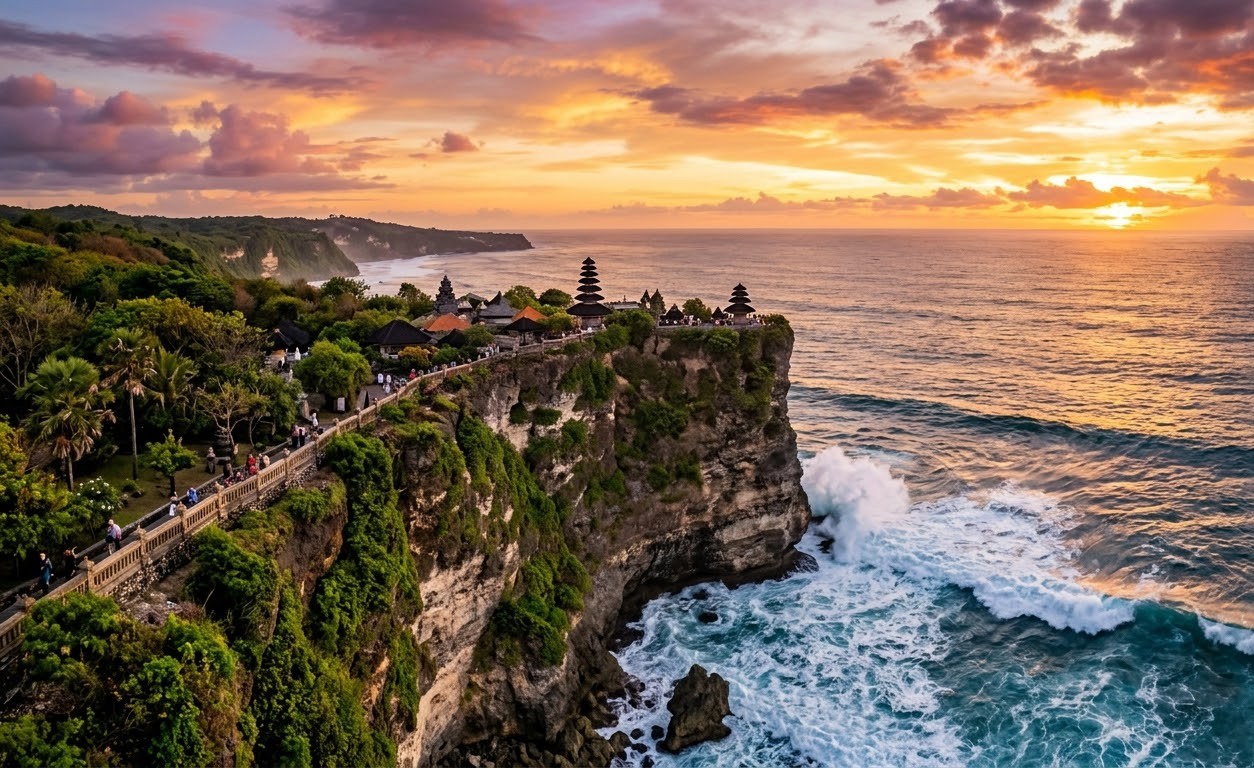
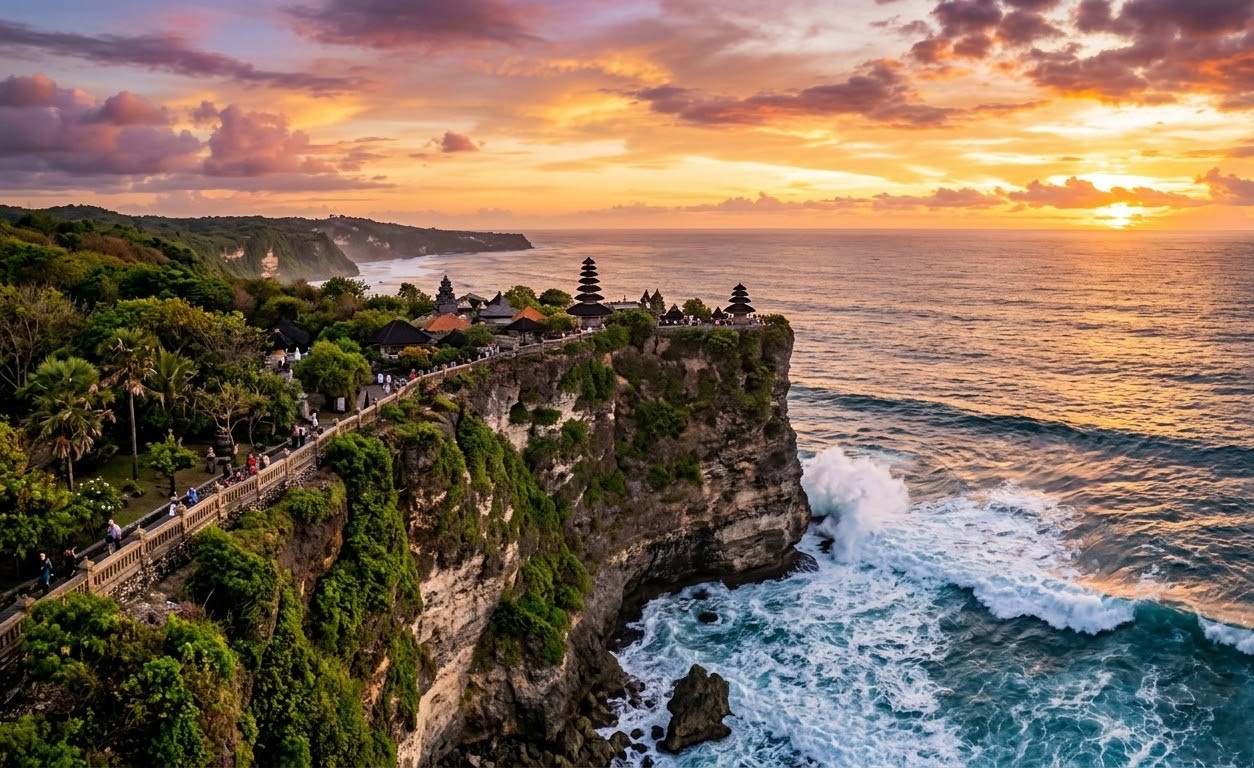
Pura Luhur Uluwatu Temple perched on a sheer 70-meter cliff at sunset
- 📌 What Country Is Bali In
- ✈️ Visa & Entry Requirements
- 💰 How Much Will a Trip Cost
- 🌴 Bali Tour Packages
- ☀️ Best Time to Visit Bali
- 🛬 How to Reach Bali & Transit
- 🗿 Ubud Temples & Terraces
- 🏖️ Nusa Penida Islands
- 🍹 Seminyak & Beach Clubs
- 🌅 Uluwatu Temple & Dance
- 🛡️ Safety & Scams Guide
- 🍲 Indian & Veg Food Guide
- 🧳 Packing & Practical Tips
What Country Is Bali In
Bali is a province of Indonesia, an archipelagic nation located in Southeast Asia. It sits at the westernmost end of the Lesser Sunda Islands, positioned directly between Java to the west and Lombok to the east. Denpasar, the provincial capital of Bali, lies in the southern part of the island near the main international airport.
Where Is Bali Located in India
Bali is not located in India. There is no island, state, union territory, or tourist district named Bali within the geographical borders of the Republic of India. The misconception often arises because Bali features a deeply rooted Hindu culture, ancient stone temples, and daily spiritual rituals that closely mirror Indian traditions. You will find familiar cultural elements here, such as statues of Lord Ganesha guarding doorways, depictions of the Ramayana and Mahabharata, and names derived from Sanskrit. However, the island itself lies entirely in Southeast Asia, roughly 4,500 kilometers away across the Indian Ocean.
Is Bali in India or Indonesia
Bali is definitively in Indonesia, not India. To understand its political and geographical placement, it helps to look at the administrative breakdown of Indonesia:
- Sovereign Nation: Republic of Indonesia
- Geographic Grouping: Maritime Southeast Asia
- Administrative Status: Bali is one of Indonesia's 38 distinct provinces verified by the Ministry of Home Affairs.
- Surrounding Body of Water: Surrounded by the Bali Sea to the north and the Indian Ocean to the south.
For Indian tourists, traveling from India to Indonesia requires a valid Indian passport and an international flight across the Indian Ocean. Upon arrival at I Gusti Ngurah Rai International Airport (DPS), you must clear Indonesian customs and immigration.
Is Bali in Thailand
No, Bali is not in Thailand. Bali and Thailand are two entirely separate, independent travel destinations in Southeast Asia belonging to different countries. Both destinations are world-famous for their tropical beaches and vibrant tourism industries, but thousands of kilometers of ocean separate them:
- Thailand: A mainland country located on the Indochinese Peninsula, bordering Myanmar, Laos, Cambodia, and Malaysia. Its main tropical tourist hubs include Phuket, Krabi, and Koh Samui.
- Bali: An island province located much further south and east, sitting entirely below the equator within the Indonesian archipelago.
Map of Bali: Regional Geography & Neighboring Islands
Understanding Bali's regional geography is crucial for planning your daily itinerary, as traffic across main roads can make short physical distances take hours. The island spans roughly 5,780 square kilometers, with a central chain of volcanic mountains running from east to west.
- South Bali (Seminyak, Canggu, Kuta, Uluwatu, Nusa Dua, Sanur): Beach clubs, fine dining, clifftop temples, luxury resorts, and surf breaks.
- Central Bali (Ubud, Tegallalang): Rainforest valleys, terraced rice paddies, traditional art markets, and wellness retreats.
- North Bali (Lovina, Singaraja): Black sand volcanic beaches, quiet dolphin watching, and high-volume waterfalls.
- East Bali (Sidemen, Amed): Peaceful rural rice valleys, traditional shadow puppet villages, and reef diving.
Bali Travel Guide: Visa on Arrival and Entry Requirements for Indian Travellers
Indian passport holders require a visa to enter Bali. You can get this either online before you travel or in person at the airport terminal. The entry process is very simple, but you must follow standard paperwork requirements. This helps you pass smoothly through immigration checkpoints at I Gusti Ngurah Rai International Airport (DPS), under rules set by the Directorate General of Immigration.
1. The Electronic Visa on Arrival (e-VOA) — B213 (Recommended)
The most efficient way to enter Indonesia is by applying for the e-VOA before your flight departs India.
- Official Website: Submit applications only through the official Indonesian Immigration Portal (Molina). Avoid third-party agency sites that charge heavy service markups.
- Cost: The standard processing fee is IDR 500,000 (approximately ₹2,700), payable online via international credit or debit cards.
- Processing Time: You typically receive it by email within 24 to 48 hours as a downloadable PDF.
- Validity: Valid for entry within 90 days of issuance. Upon arrival, it permits a stay of up to 30 days.
- The Biggest Benefit: Holding an e-VOA allows you to bypass long payment queues at the airport terminal. You can head straight to automated immigration gates (Autogates) or dedicated e-visa counters, saving up to an hour of waiting time.
2. Physical Visa on Arrival (VoA)
If you cannot apply online beforehand, you can purchase a physical VoA directly upon landing.
- Process: Before lining up for passport control, walk to the designated "Visa on Arrival" payment counters inside the terminal.
- Payment Methods: The fee is identical—IDR 500,000 (~₹2,700). Counters accept major foreign currencies (USD, Euros, AUD, or SGD) or international credit cards. You'll get cash change back in local Indonesian Rupiah (IDR).
3. Extending Your Visa
Both the e-VOA and physical VoA grant an initial 30-day stay. If you wish to extend your holiday, you can extend the visa exactly once for an additional 30 days. This allows a maximum total stay of 60 days.
- If you entered via e-VOA, you can easily complete and pay for this extension online at the Indonesian Immigration Portal.
- If you entered via physical VoA, you must visit a local Balinese Immigration Office (Imigrasi) three times in Renon, Jimbaran, or Singaraja. Alternatively, you can hire a local travel agent to process the extension for you.
4. Mandatory Secondary Entry Documents
A visa alone does not guarantee entry. Immigration officers will strictly verify the following documents per guidelines from the Embassy of India in Jakarta:
- Passport Validity: Your passport must have at least 6 months of validity remaining from your exact date of entry into Indonesia. It must also contain at least two blank pages.
- Return Flight Ticket: A confirmed onward or return flight ticket departing Indonesia within the 30-day visa limit is strictly mandatory. Airlines generally do not accept standby or open-dated tickets.
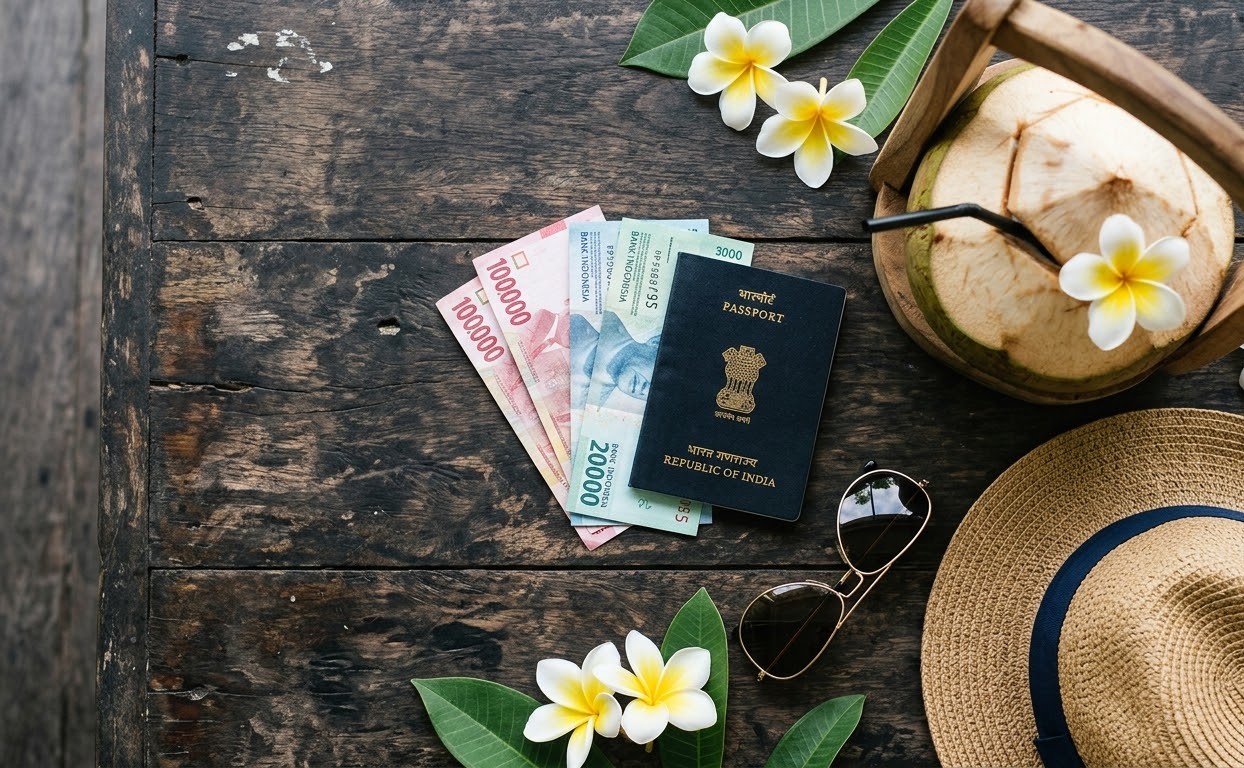
- The Bali Tourist Tax: The provincial government introduced a mandatory levy: all international tourists must pay IDR 150,000 (approximately ₹815) per person. Ideally, pay this before arrival via the official Love Bali Portal to generate a digital voucher QR code. Staff will scan this QR code at the airport arrival gates.
- Electronic Customs Declaration (ECD): Indonesia has completely digitized customs processing. You must fill out the form online via the official Indonesian Customs Portal within 3 days of your flight arrival. Save the generated QR code on your mobile device to scan right before exiting the baggage claim area.
Essential travel documents, e-VOA confirmation, and Indonesian currency for entry
How Much Will a Bali Trip Cost
The total cost of a Bali vacation depends heavily on your choice of airline routes, travel season, and accommodation preferences. Bali accommodates everyone from budget backpackers to ultra-luxury jet-setters. A well-planned 7-day trip can cost anywhere from ₹40,000 to ₹1,35,000+ per person (excluding luxury shopping). This Bali travel guide breaks the trip down into itemised costs below, so you know exactly what to budget.
| Expense Category | Budget-Conscious Traveler (INR) | Mid-Range to Luxury Traveler (INR) |
|---|---|---|
| Return Flights (Connecting low-cost vs. Direct Vistara/IndiGo) | ₹22,000 – ₹28,000 | ₹35,000 – ₹45,000 |
| 7-Day Accommodation (Guesthouses vs. Private Pool Villas) | ₹7,000 – ₹12,000 | ₹25,000 – ₹50,000 |
| Daily Meals & Drinks (Local Warungs vs. Fine Dining & Beach Clubs) | ₹6,000 – ₹10,000 | ₹15,000 – ₹25,000 |
| Activities & Entry Fees (Temples, Bali Swing, Nusa Penida Boat) | ₹5,000 – ₹8,000 | ₹10,000 – ₹15,000 |
| Total Estimated Trip Budget | ₹40,000 – ₹58,000 | ₹85,000 – ₹1,35,000+ |
Itemised Budget Projections
- Flights from India (₹22,000 – ₹45,000): Flights on low-cost carriers like AirAsia, VietJet, or Scoot include a short layover in Kuala Lumpur, Ho Chi Minh City, or Singapore. These options cost around ₹22,000 – ₹30,000 return. Direct flights from major hubs like Delhi and Mumbai via IndiGo cost around ₹35,000 – ₹45,000 return.
- Accommodation (₹1,000 – ₹15,000+ per night): Budget homestays with pool run ₹1,000 – ₹2,000/night. 4-star modern resorts in Ubud or Kuta range from ₹3,500 – ₹6,000/night. A private pool villa in Seminyak or Canggu starts around ₹7,500 – ₹15,000+/night.
- Local Travel & Sightseeing (₹500 – ₹3,500 per day): Scooters cost ₹450 – ₹600 per day (IDR 80,000 - 100,000). A private air-conditioned car with driver for 10 hours costs ₹2,500 – ₹3,500 total (IDR 450,000 - 650,000). Prominent temple tickets run IDR 50,000 – IDR 75,000 (~₹270 - ₹400).
Is Bali Expensive for Indian Tourists
No, Bali is remarkably affordable for Indian tourists and stands out as one of the most budget-friendly international destinations accessible from India. European or Middle Eastern holidays quickly drain Indian currency due to high exchange rates. In contrast, the Indian Rupee retains high purchasing power in Bali. When evaluating overall trip budgets across Asian destinations, as discussed in our Japan travel guide for Indian tourists, Bali consistently provides superior physical space and private luxury per Rupee spent.
- Unmatched Luxury Value: A basic entry-level 5-star hotel room in Mumbai or Delhi costs as much as a luxury villa in Ubud. For the same price, you can enjoy a private pool, daily butler service, and lush jungle views.
- Highly Affordable Dining: Eating out does not require a large budget. Local Balinese Warungs (family-run restaurants) serve delicious meals like Nasi Goreng or Mie Goreng. A filling dish costs just ₹150 to ₹250 per person.
- Low-Cost Massages and Wellness: A 60-minute traditional Balinese spa massage at a clean, high-street parlor costs between IDR 100,000 and IDR 150,000 (~₹540 - ₹815). These affordable rates make daily relaxation easy.
Bali Country Currency to INR
Understanding exchange rate dynamics is essential for planning daily travel expenses. For more detailed comparison tips on multi-currency forex management across Asian currencies, read our Japan currency yen to rupee trip cost guide.
- Official Currency: The legal currency used across the island is the Indonesian Rupiah (IDR).
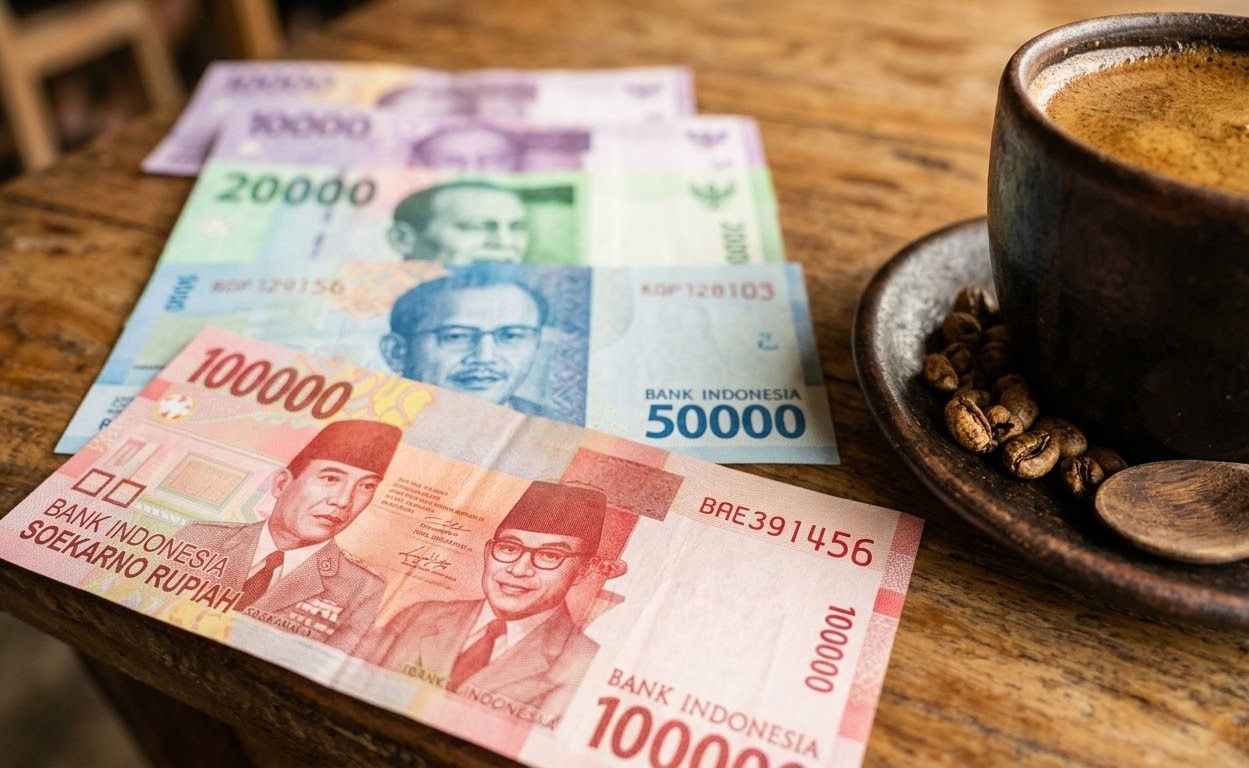
- Exchange Rate Baseline: Monitored by Bank Indonesia, average conversion rate:
1 INR ≈ 180 to 185 IDR|10,000 IDR ≈ 54 to 55 INR - The "Millionaire" Mental Hack: Drop the last three zeroes of the IDR price and multiply the remaining number by 5.5 to get the approximate INR cost. Example: 200,000 IDR ➔ Drop 3 zeroes = 200 ➔ 200 × 5.5 = ₹1,100 INR.
- Cash vs. Card: Most restaurants, supermarkets, beach clubs, and hotels accept international Visa and Mastercard cards. However, carry small cash denominations (IDR) for remote temple entries, local street food vendors, parking attendants, and tips.
- Forex Hack: Do not exchange INR to IDR at local currency booths inside Indian airports. Instead, use a pre-loaded international Multi-Currency Forex Card. You can also withdraw IDR directly from trusted bank ATMs like BNI, Mandiri, or BCA upon landing to get the lowest transactional markups.
Indonesian Rupiah banknotes—drop 3 zeroes and multiply by 5.5 for quick INR mental math
Bali Tour Packages for Couples Including Flights
Flight-inclusive Bali couple packages from India provide a seamless, stress-free romantic escape. These all-inclusive bundles cover return flights, curated romantic accommodations, and private airport transfers, eliminating any logistical hassle upon landing.
Couples can enjoy premium inclusions like an enchanting sunset tour at Tanah Lot, high-altitude jungle swings in Ubud, and side-by-side Balinese spa sessions. Tour operators tailor these itineraries specifically to maximize your value for money. They typically split stays between lively coastal beach resorts and secluded, private pool villas deep in the Ubud rainforest.
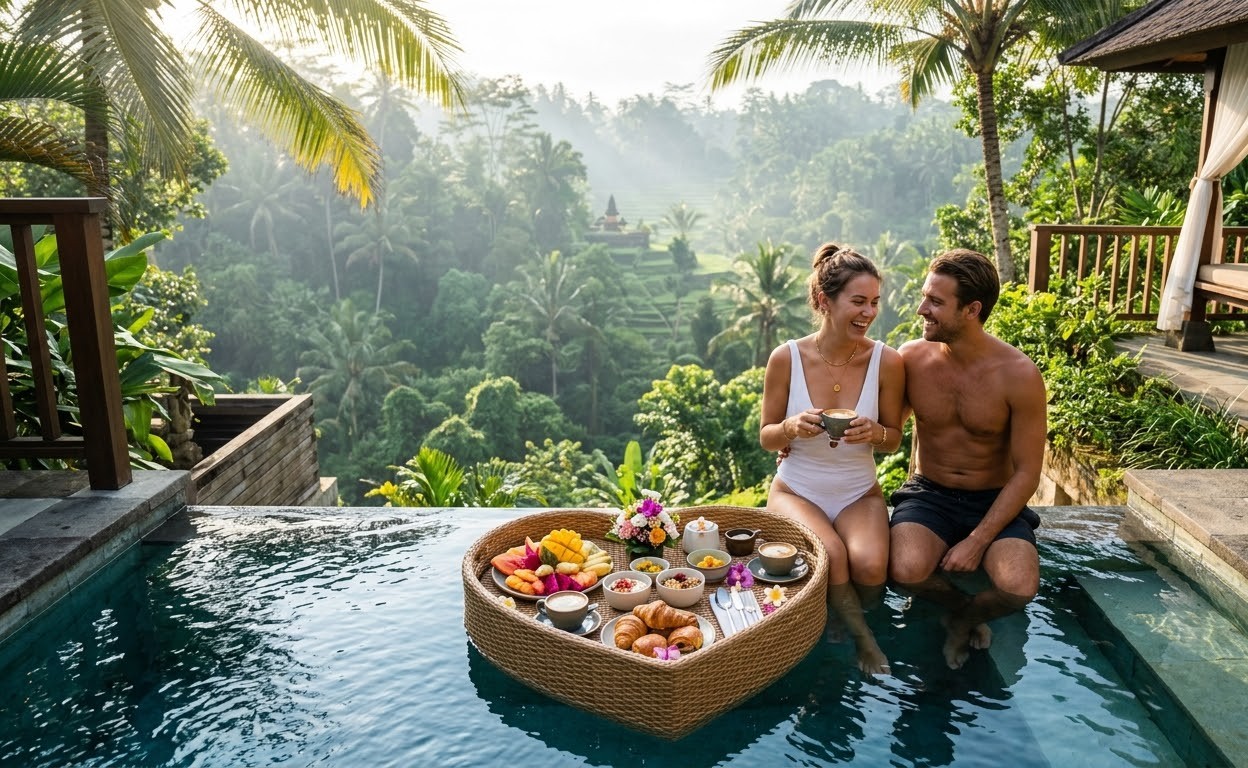
Private luxury pool villa in Ubud—a cornerstone of romantic couple packages
Bali Tour Package 5 Days 4 Nights
The 5 Days and 4 Nights (4N/5D) package is an ideal, fast-paced tropical sampler for time-conscious Indian travellers. This efficient itinerary eliminates long transit windows by focusing entirely on the main highlights of South and Central Bali.
- Budget to Standard Package Cost: ₹45,000 – ₹58,000 per person (low-cost connecting flights & standard 3-star stays).
- Premium Honeymoon Package Cost: ₹65,000 – ₹78,000 per person (comfortable flights, private pool villa split-stay, all entry fees).
- Day 1: Land at Ngurah Rai International Airport, clear customs, meet private driver, transfer to South Bali beach hotel (Kuta/Seminyak). Sunset at Uluwatu Temple.
- Day 2: Journey to central Ubud. Walk through Tegallalang Rice Terrace, try the high-altitude Bali Swing over jungle canopy, view Mount Batur volcano in Kintamani, coffee tasting.
- Day 3: Morning speed boat from Sanur Harbor for Nusa Penida island day trip. Photography at Kelingking Beach, Broken Beach, and Angel's Billabong.
- Day 4: Water sports at Tanjung Benoa beach (parasailing/banana boat). Afternoon tour of Tanah Lot Temple on sea rock, candlelit seafood dinner at Jimbaran Bay.
- Day 5: Souvenir shopping at Ubud Art Market, private transfer back to airport for return flight home.
7 Days Bali Tour Package
A 7 Days and 6 Nights (6N/7D) package offers a perfectly balanced, relaxed holiday timeline. This itinerary expands beyond the mainland to include offshore tropical islands and cooler mountain lakes. If you want to compare multi-destination itineraries across Asia, see our Singapore 6-day itinerary and Kyoto and Osaka itinerary for planning twin-city vacations.
- Standard Group/Customized Package Cost: ₹68,000 – ₹85,000 per person (4-star hotels, return flights, major entry tickets, daily breakfast).
- Luxury Villa Split-Stay Package Cost: ₹95,000 – ₹1,25,000+ per person (direct flights, luxury private pool villa, private driver tours, specialty dinners).
- Days 1–2: Check into vibrant coastal resort in Seminyak/Canggu, enjoy water sports, watch clifftop Kecak Fire Dance performance.
- Days 3–4: Move to scenic jungle villa in Ubud. Explore artisan silver craft villages in Celuk, view Tegenungan Waterfall and Kintamani Volcano caldera.
- Day 5: Board speed boat from Sanur for all-inclusive day trip to Nusa Penida's iconic Kelingking Beach and Angel's Billabong.
- Day 6: Travel north to cooler mountain region of Bedugul. Visit Pura Ulun Danu Bratan floating lake temple, photo stop at Handara Gate, 2-hour traditional Balinese spa massage.
- Day 7: Complete checkout, wrap up souvenir market shopping, private transfer to airport for flight back to India.
Bali Packages for Family
Bali family tour packages focus on maximum comfort, child-safe logistics, and multi-generational entertainment. These bundles swap out rugged adventures for spacious multi-bedroom private suites, comfortable mini-van transport, and accessible sightseeing spots.
- The Right Neighborhoods: You can stay in Nusa Dua, which features gated 5-star resorts with wave-free beaches, kid's clubs, and family pools. Sanur is another great choice, offering a quiet beach with a stroller-friendly paved walkway.
- Comfortable Logistics: Airport transfers and tours utilize larger air-conditioned mini-vans (Toyota HiAce) for legroom and luggage.
- Kid-Friendly Attractions: Emphasizes destinations like Waterbom Bali Waterpark in Kuta (frequently ranked Asia's top waterpark on TripAdvisor), Sacred Monkey Forest Sanctuary, and Bali Safari & Marine Park. For families evaluating wildlife parks across Southeast Asia, read our Mandai Wildlife Reserve guide.
- Meal Planning: Includes daily hotel buffet breakfasts and pre-arranged dinners at family restaurants offering continental and authentic Indian options.
Best Time to Visit Bali: Essential Bali Travel Guide
The peak season to visit Bali runs from April to October during the dry season, as recorded by the Indonesian Meteorology Agency (BMKG). This window features clear blue skies, lower humidity levels, and excellent conditions for beach hopping, surfing, and outdoor sightseeing. June through August brings cool evening breezes, though tourist crowds and hotel pricing peak sharply during this period.
Conversely, the wet monsoon season spans from November to March. While heavy tropical downpours are common, rain often occurs in short bursts during the afternoon or night. Traveling during these months offers distinct advantages, such as significantly cheaper flight tickets and discounted luxury villa rates. You will also enjoy a peaceful environment at major sightseeing spots like the Tegallalang Rice Terrace. If you align your travel calendar with regional festival events across Southeast Asia, check out our Tomorrowland Thailand 2026 guide.
How to Reach Bali via Ngurah Rai International Airport
This part of the Bali travel guide covers direct flights, layovers, and what happens after you land. Most international travelers reach the island via I Gusti Ngurah Rai International Airport (DPS) in Denpasar. Located in southern Bali, this modern aviation hub connects the island globally. Major Indian carriers like IndiGo and Air India offer comfortable direct flights from metro hubs like Delhi and Mumbai. Average flight times range from 7 to 8 hours.
Alternatively, low-cost carriers like AirAsia, VietJet, and Scoot operate cost-effective connecting routes with quick layovers in Kuala Lumpur, Ho Chi Minh City, or Singapore. If you choose a layover in Kuala Lumpur, read our Kuala Lumpur travel guide and broader Malaysia travel guide. For Singapore layovers via Changi Airport, check out our Jewel Changi Airport visitor guide.
Local Transport in Bali: Cars, Scooters and Ride-Hailing Apps
Navigating Bali is easy if you use local digital apps instead of traditional street side transport. Public bus transit is virtually non-existent, making personal or on-demand vehicle booking the standard way to get around the island.
- Ride-Hailing Apps: Download Gojek or Grab immediately upon landing. They function like Uber or Ola, offering fixed upfront pricing for cars and motorbike taxis to avoid haggling with airport taxi drivers.
- Scooter Rentals: Renting a moped costs roughly ₹450 to ₹600 per day (IDR 80,000 – 100,000). It is the fastest way to bypass heavy traffic in Seminyak or Canggu. As the Consulate General of India in Bali notes, drivers must carry a valid International Driving Permit (IDP) and wear a helmet.
- Private Cars with Drivers: Hiring a private, air-conditioned car with a local driver is ideal for families or full-day sightseeing tours. It costs between ₹2,500 and ₹3,500 per day (IDR 450,000 – 650,000), which covers fuel and parking fees.
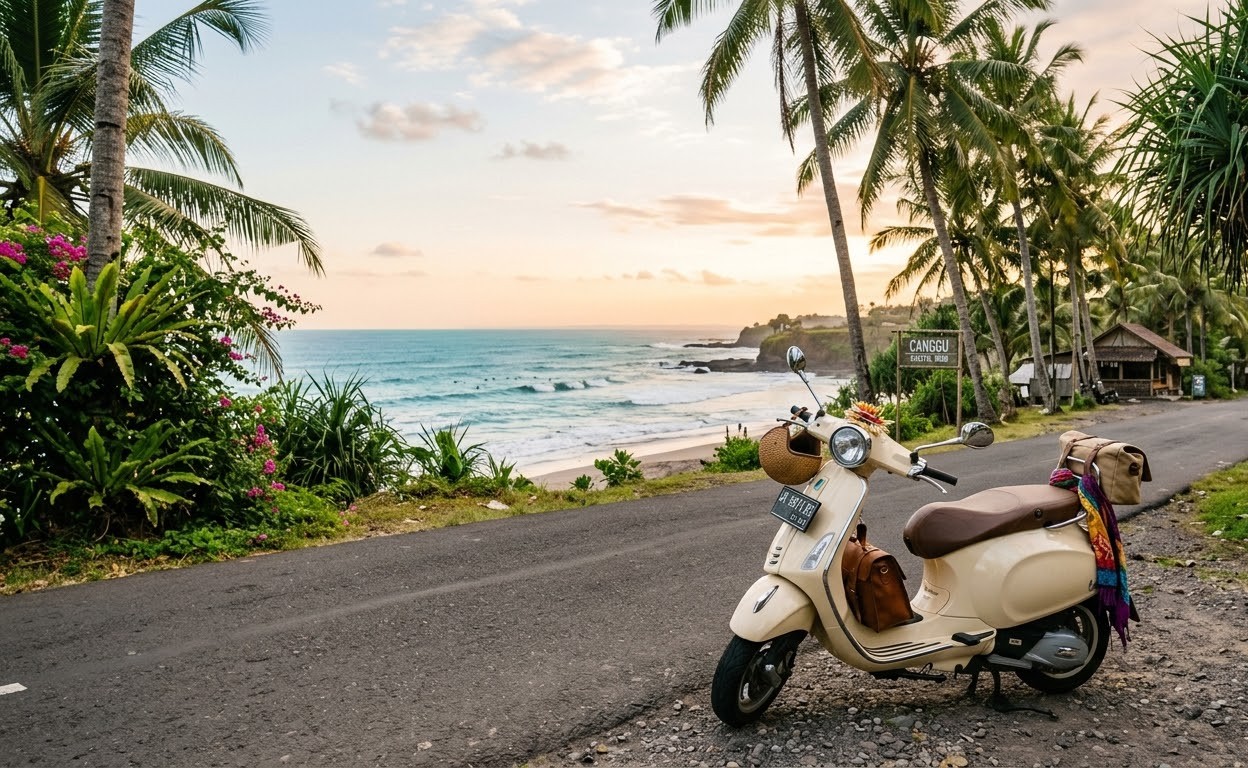
Renting a scooter is the most popular way to bypass traffic in coastal hubs like Canggu
Ubud Monkey Forest and Cultural Attractions: A Bali Travel Guide to Central Ubud
Ubud serves as the beating heart of Balinese art, deep spirituality, and heritage. Nestled in the central highlands, this vibrant cultural hub is famous for its intricate royal architecture, traditional dance performances, and ancient forest sanctuaries. It offers a refreshing green contrast to Bali's beach scenes. For travelers who appreciate ancient spiritual sites and heritage towns across Asia, read our Kyoto Japan travel guide for Indian tourists.
Sacred Monkey Forest Sanctuary Ubud
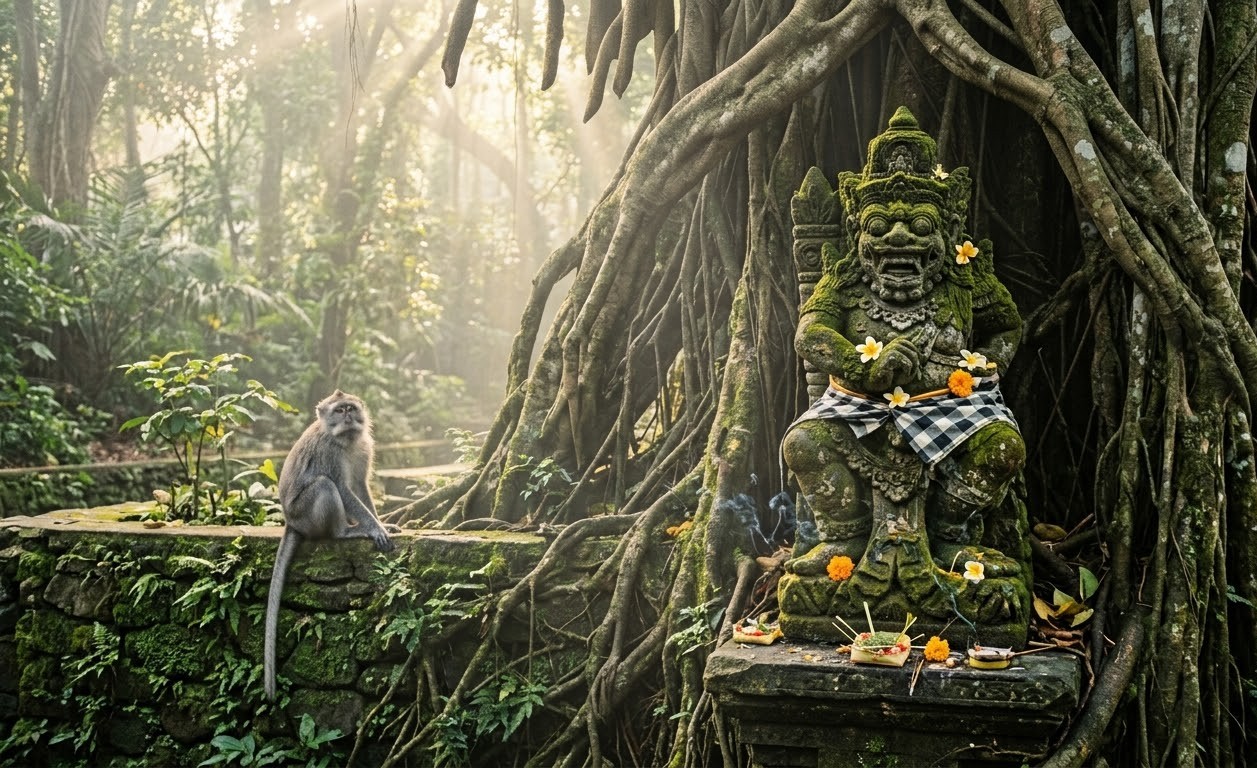
The Sacred Monkey Forest Sanctuary is a deep jungle home to over 1,200 wild grey long-tailed macaques. This ecological reserve is deeply rooted in the Balinese Hindu philosophy of Tri Hita Karana, which promotes harmony between humans, nature, and the divine. As you walk down shaded stone pathways, you will see three ancient, moss-covered temples built during the 14th century. Massive banyan tree roots beautifully frame these stone structures.
- Entry Fee: Verified official rate: IDR 80,000 (~₹440) on weekdays and IDR 100,000 (~₹550) on weekends.
- Visitor Rule: Keep all personal items, sunglasses, and phones securely zipped inside your bags. Avoid making direct eye contact or carrying loose food near the monkeys.
Sacred Monkey Forest Sanctuary in Ubud—home to over 1,200 long-tailed macaques
Ubud Palace Bali
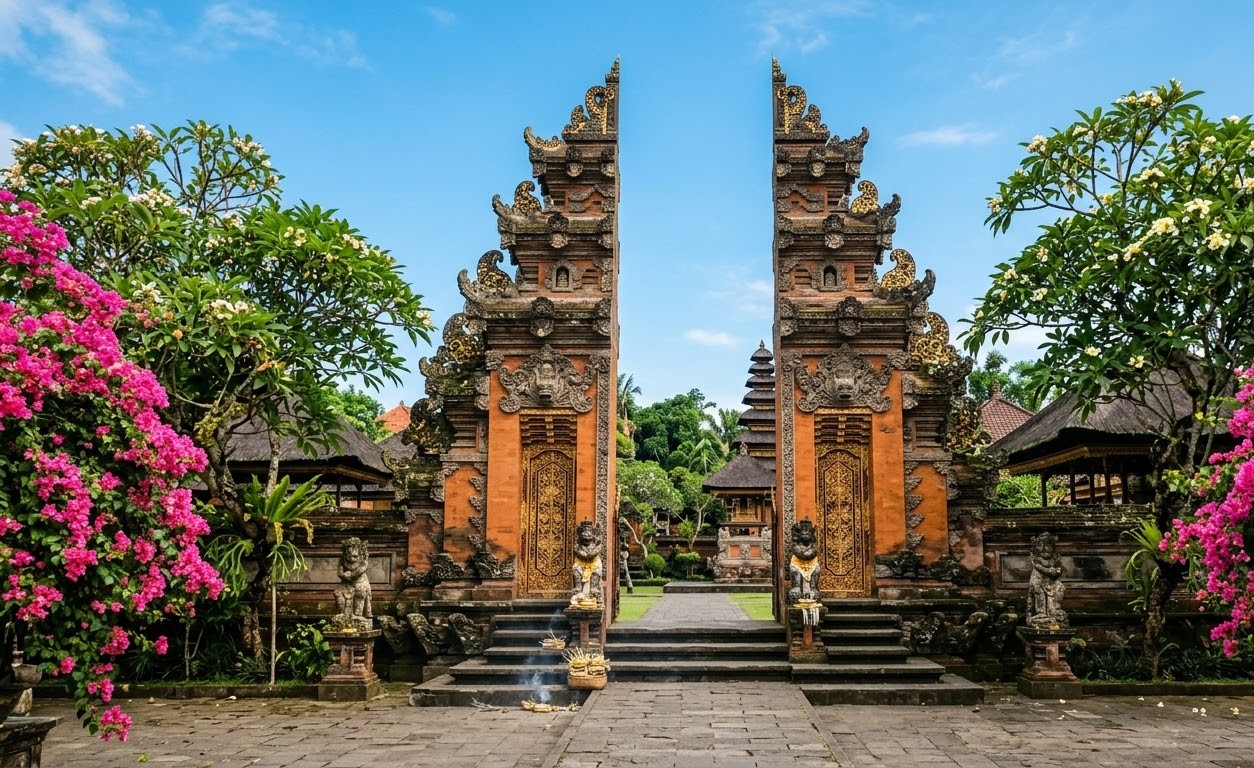
Ubud Palace, officially known as Puri Saren Agung, is the historic residence of the local royal family as documented by Indonesia Tourism. Located right in the center of town, the palace features remarkably preserved traditional Balinese architecture. Highlights include grand stone-carved split gateways (Candi Bentar), peaceful courtyard gardens, and intricate gold-leaf woodwork. While parts of the palace remain private for the royal family, the main courtyards are open to the public during the day for quick photo sessions. In the evening, the palace transforms into an atmospheric open-air stage for traditional Balinese dance dramas, like the Legong or Barong dance. Live gamelan music orchestras accompany these captivating performances.
Ubud Palace split gate (Candi Bentar)—showcasing traditional Balinese stone carving
Tegallalang Rice Terraces Ubud
The Tegallalang Rice Terraces in Ubud are famous for their cascading emerald green valley views and iconic high-altitude jungle swings. Walking down the carved hillside paths allows visitors to observe traditional Balinese subak irrigation systems that have maintained these terraces for centuries.
Tegallalang Rice Terraces in Ubud—famous for breathtaking emerald views and high-altitude swings
Mount Batur Volcanic Caldera & Kintamani Highlands
Located a short drive north of Ubud, Kintamani sits on the rim of the active Mount Batur volcanic crater. Standing at the lookout offers panoramic views of Mount Batur (1,717 meters) and Lake Batur set inside a massive prehistoric caldera. Adventurous travelers can book guided sunrise treks starting at 3:30 AM from the base, taking roughly 2 hours to reach the summit peak in time for sunrise above the clouds. Volcanic activity is monitored continuously by the Indonesian Volcanology Center (MAGMA ESDM).
Hidden Waterfalls of Central Bali
The highland rainforests surrounding Ubud are home to several spectacular waterfalls: Tegenungan Waterfall offers an accessible, high-volume plunge pool; Tukad Cepung Waterfall is famous for sunbeams shining down through a narrow canyon cave opening around midday; and Kanto Lampo Waterfall features water cascading over a terraced rock wall perfect for photos.
Nusa Penida Island Beaches and Viewpoints
Nusa Penida is a rugged, dramatic island located just off Bali’s southeastern coast. Famous for its massive limestone cliffs, wild coastal geography, and bright turquoise water, this offshore territory has become an absolute favorite for travel photography. Most tourists visit via an organized day-trip speed boat from Sanur Harbor to experience its jaw-dropping cliffside lookouts.
Crystal Bay Nusa Penida
Crystal Bay is a beautiful crescent of white sand flanked by clusters of shady palm trees. Unlike the island's more rugged, cliff-enclosed shores, this beach offers calm, gentle waves and clear waters. It is an excellent spot for sunbathing, casual swimming, and shore snorkeling. The bay faces west, creating a stunning setting for evening sunsets. A tiny, rock-island temple sits just a short distance off the coast, adding a beautiful touch to the scenic view.
Diamond Beach Nusa Penida
Diamond Beach is famous for its dramatic white stairway carved directly into the face of a sheer limestone cliff. As you walk down the cliffside path, you will get a clear view of the bright white sand beach below. Sharp, diamond-shaped rock spires rise straight out of the turquoise ocean surrounding the shore. The water here features intense undercurrents, so we generally do not recommend swimming. However, the dramatic stairs and swings make it one of the top photography spots in Bali.
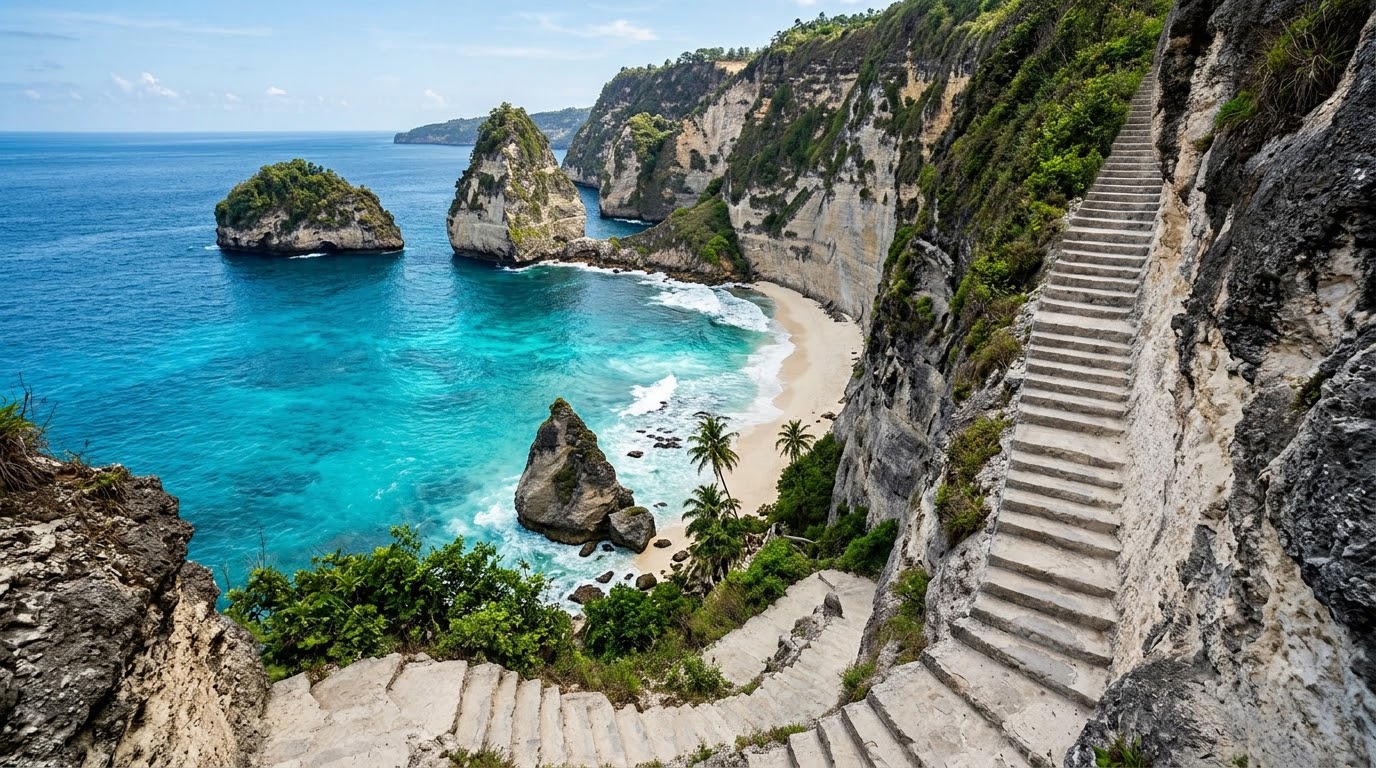
Diamond Beach cliffside staircase—one of Nusa Penida's most iconic photo spots
Kelingking Beach Nusa Penida
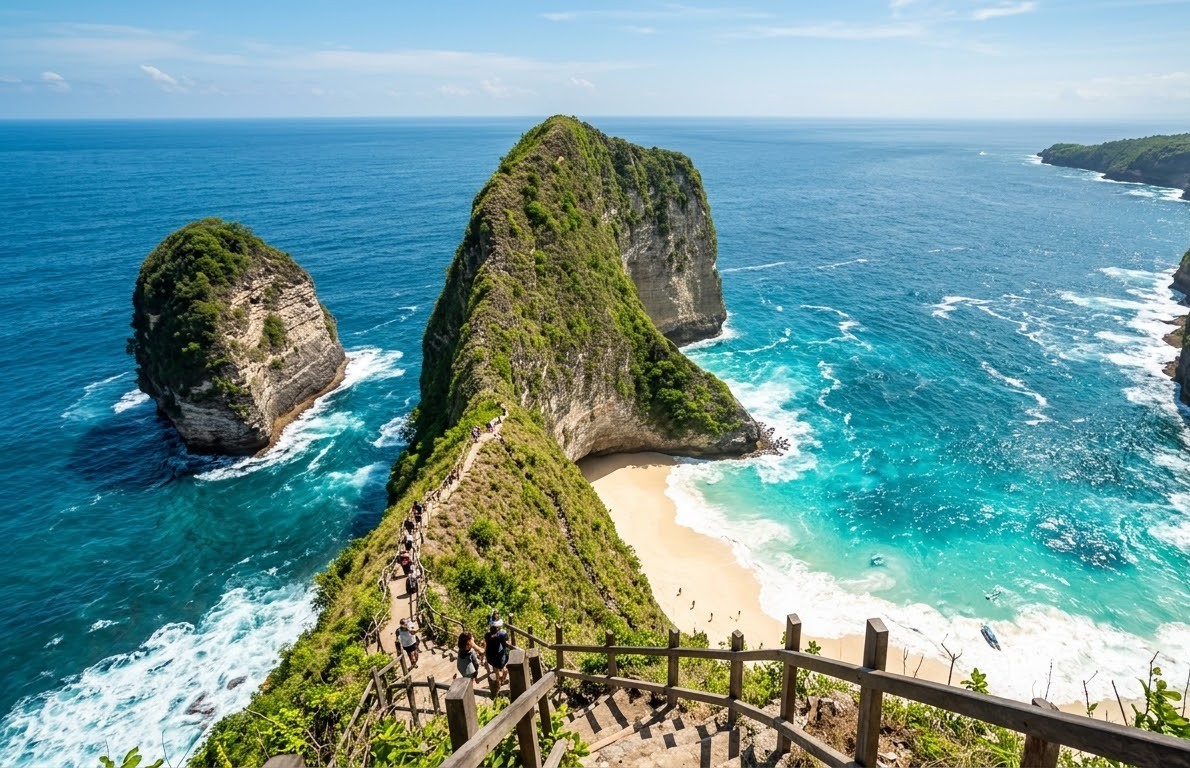
Kelingking Beach is world-famous for its massive coastal cliff that looks remarkably like a T-Rex. From the main clifftop viewpoint, you can look down over a hidden cove of white sand. Bright turquoise waves crash against the rocks far below. For adventurous travelers, a steep, challenging, and unpaved dirt path leads down the spine of the cliff to the beach itself. The hike down takes about 45 minutes each way and requires proper footwear, careful stepping, and plenty of drinking water.
Kelingking Beach lookout—famous worldwide for its striking T-Rex limestone cliff formation
Broken Beach Nusa Penida
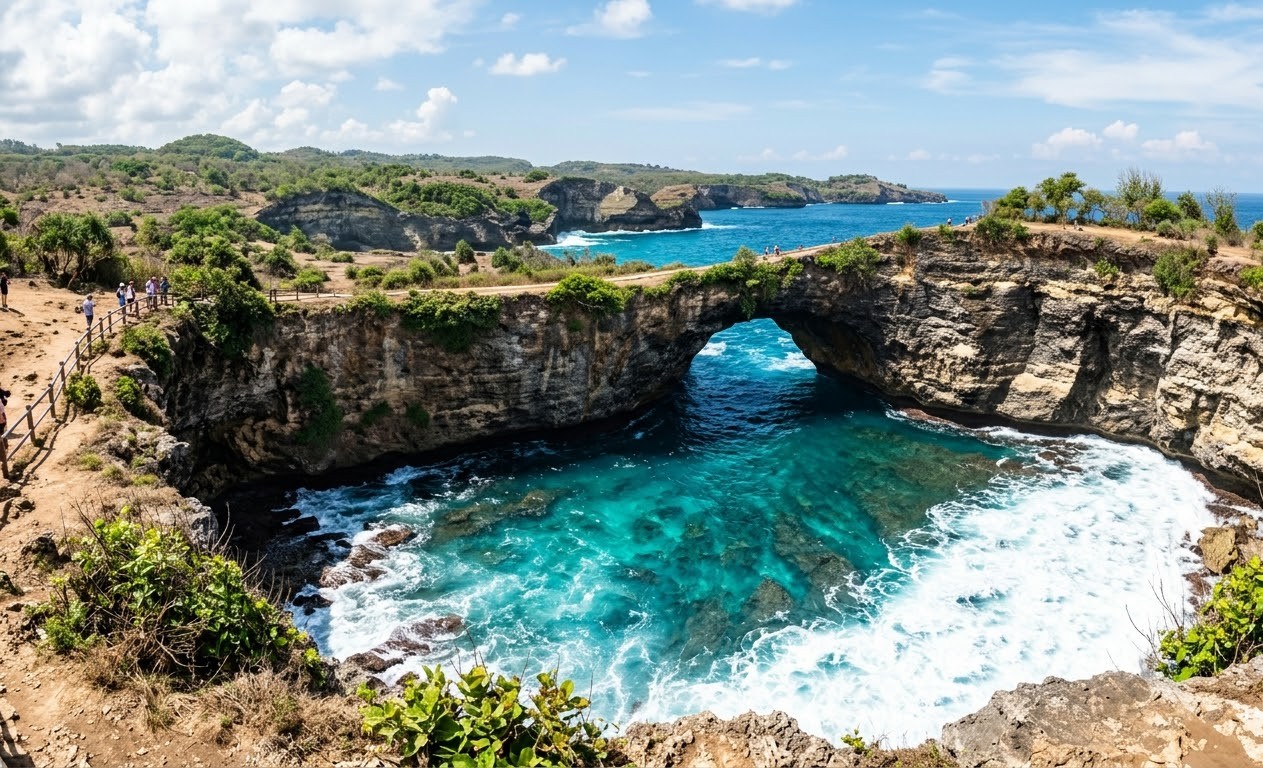
Broken Beach, locally known as Pasih Uug, is a striking coastal cove formed by a collapsed limestone cave. Over thousands of years, crashing ocean waves wore away the rock, leaving behind a massive, natural circular pool spanned by a beautiful stone archway. You cannot hike down into the water. However, you can walk all the way around the upper edge of the circular cliff. From there, you can capture panoramic views of the Indian Ocean through the rocky opening.

Broken Beach in Nusa Penida—featuring a natural circular pool spanned by a massive stone archway
Snorkeling in Nusa Penida
Snorkeling in Nusa Penida offers an unforgettable chance to swim alongside giant, gentle manta rays. Boat excursions leave daily from the main island and stop at prominent marine hotspots like Manta Point, Gamat Bay, and the Wall Bay coral reef drop-offs. The local waters are rich in marine nutrients, support healthy coral gardens, and draw large schools of colorful tropical fish. The water currents around the island can get very strong. We highly recommend booking a guided boat tour that includes experienced local lifeguards and high-quality safety gear.
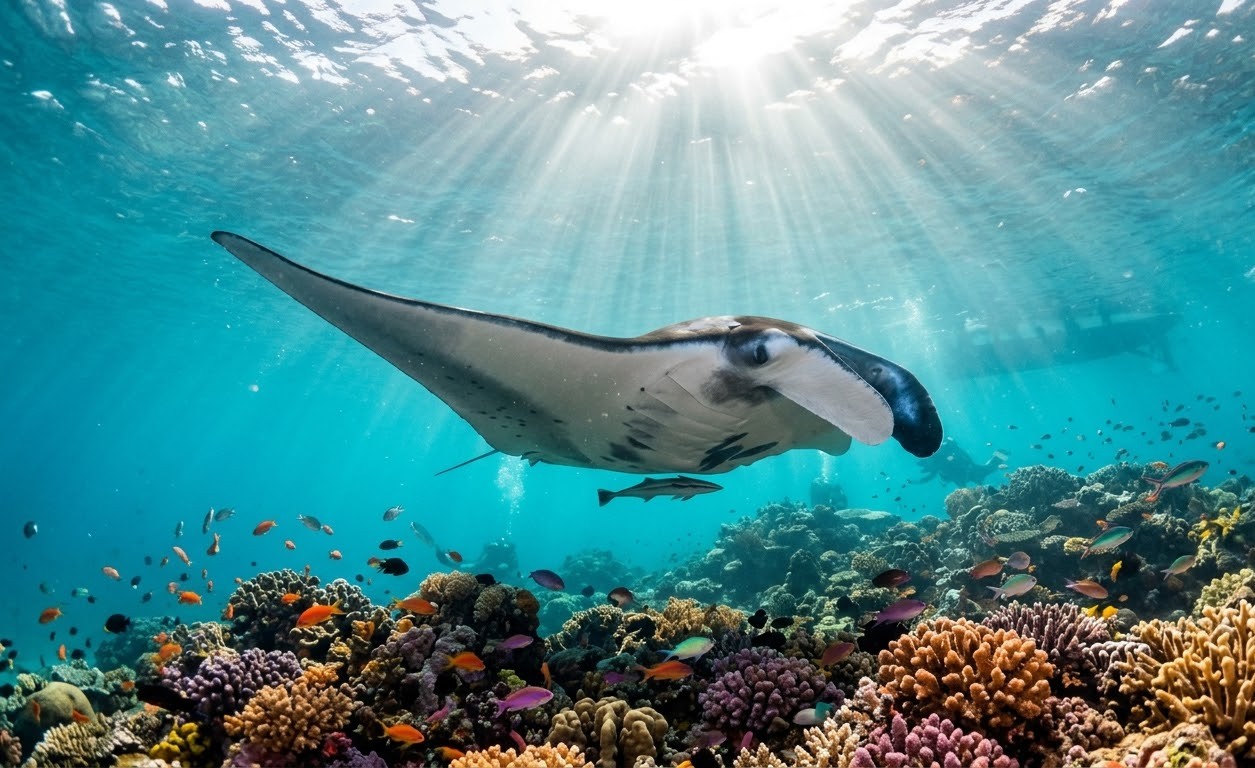
Snorkeling with giant oceanic manta rays off the coast of Nusa Penida
Seminyak Beach and Hotels
Seminyak is Bali's premier upscale coastal destination, renowned for its sophisticated energy and stylish lifestyle. Positioned just north of Legian and Kuta, this trendy neighborhood trades crowded party alleys for high-end boutique shopping, fine-dining restaurants, and sophisticated cocktail lounges. It serves as the ideal base for travelers seeking premium beachfront comfort and trendy cafes. You can enjoy spectacular Indian Ocean sunsets without sacrificing urban convenience.
Hotels in Seminyak Bali Indonesia
Accommodations in Seminyak prioritize stylish design, modern amenities, and high-end hospitality. The area offers an excellent mix of luxury beachfront resorts and private pool villas, making it a favorite for couples and honeymooners. Top-tier international properties like The Seminyak Beach Resort & Spa and W Bali - Seminyak offer direct ocean access, infinity pools, and world-class spas.
For travelers seeking privacy, Seminyak offers beautifully designed one- and two-bedroom private villas. These are tucked away in quiet side streets (gangs), just minutes from the main dining strips. Budget-conscious boutique hotels are also available, providing excellent value for money.
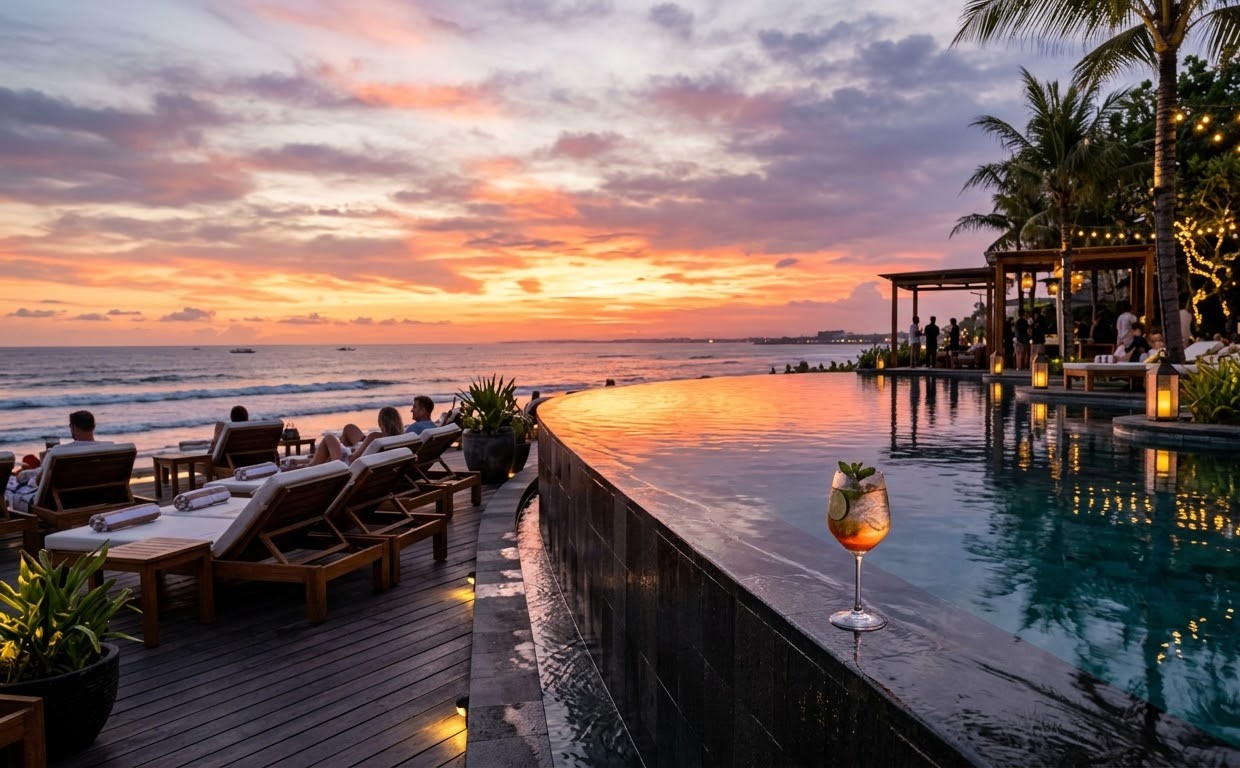
Luxury beachfront resort in Seminyak—offering infinity pools and prime Indian Ocean views
Seminyak Beach Bali Indonesia
Seminyak Beach features a wide stretch of dark golden sand that is perfect for sunset walks. The beach stretches for several kilometers and is known for its lively surf culture, vibrant rows of colorful beanbags, and casual beachside bars (warungs).
While strong undercurrents and waves make it more suited for surfing than casual swimming, it is the ultimate spot for evening relaxation. As sunset approaches, acoustic musicians set up along the sand. Venues like La Plancha fill with travelers enjoying fresh drinks under bright Balinese umbrellas while watching the brilliant orange sky.
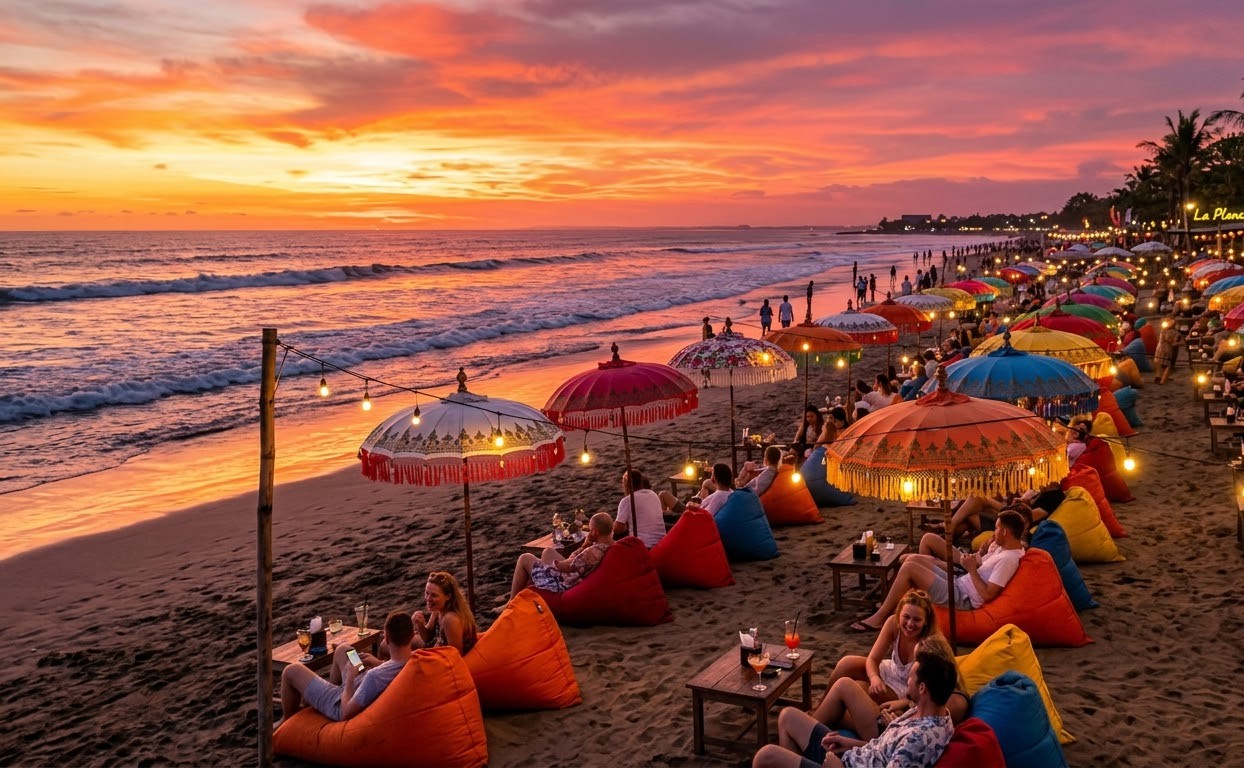
Seminyak Beach at sunset—famous for colorful beanbags, acoustic music, and vibrant atmosphere
Canggu Vibe: Surf Beaches & Eco-Cafes
Located just north of Seminyak, Canggu is Bali's hub for surfers, digital nomads, and eco-conscious travelers. Beaches like Echo Beach, Batu Bolong, and Berawa feature consistent surf breaks lined with casual beach lounges and sourdough bakeries. Backroads like the Canggu Shortcut wind past scenic green rice paddies connecting lively main dining strips.
World-Class Beach Clubs in Bali
Bali's beach club culture is world-renowned: Potato Head Beach Club in Seminyak features sustainable wooden architecture, organic cocktails, and an oceanfront infinity pool; Finns Beach Club in Canggu offers four pool bars and live DJs; Atlas Beach Fest is the world's largest beach club complex; and La Brisa at Echo Beach is built entirely from reclaimed wooden fishing boats under shady palm trees.
Uluwatu Temple and Kecak Dance
Uluwatu offers a dramatic combination of ancient spirituality, traditional performing arts, and breathtaking coastal scenery. Located on the southwestern tip of the Bukit Peninsula, this region is famous for its sheer limestone cliffs that drop into the Indian Ocean. As a cornerstone of Balinese culture, Uluwatu draws thousands of daily visitors. People come to witness its historic clifftop monuments and spectacular evening amphitheater performances.
Pura Luhur Uluwatu Temple Bali
Pura Luhur Uluwatu is one of Bali's six spiritual pillars, built right on the edge of a 70-meter-high cliff. Dedicated to Rudra, the Balinese Hindu god of the elements, this ancient sea temple dates back to the 11th century.
A paved stone pathway runs along the cliff edge, offering incredible panoramic views of ocean waves crashing against the rocks far below. The temple forest is home to a large population of wild macaque monkeys. These cheeky primates often snatch loose items like sunglasses, hats, and smartphones from unsuspecting tourists.
Uluwatu Temple with Kecak Dance
The Kecak Fire Dance at Uluwatu Temple is one of Bali's most iconic and memorable cultural experiences, as documented by Indonesia Cultural Tourism. Held at sunset in a cliffside open-air amphitheater, this traditional performance tells the classic story of the Ramayana, focusing on Lord Rama, Sita, and Hanuman.
Instead of musical instruments, a chorus of over 50 bare-chested men provides the soundtrack. They chant "Chak-chak-chak" in complex rhythms while moving in circles around a blazing fire. We recommend booking your tickets well in advance, as the amphitheater fills up quickly every evening before sunset.
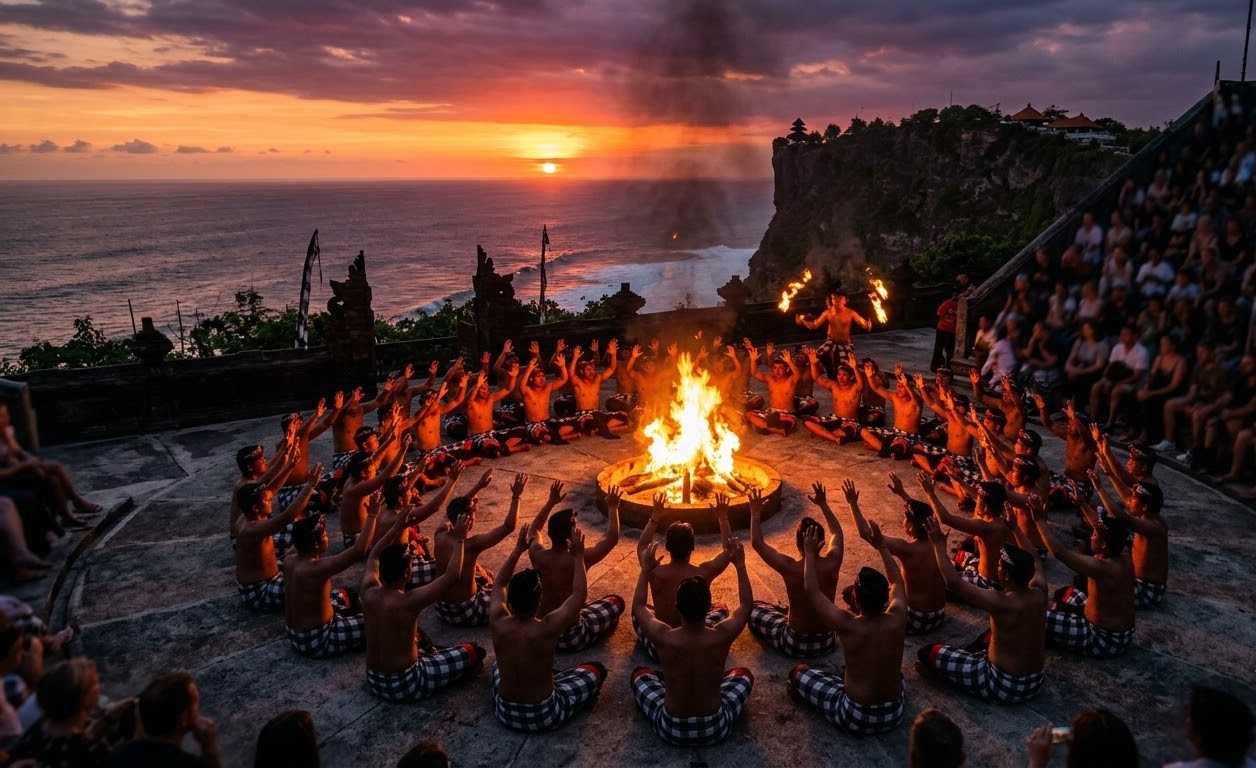
Kecak Fire Dance performance at sunset in Uluwatu's open-air cliffside amphitheater
Uluwatu Surf Beaches
Uluwatu Beach, also known as Suluban Beach or Blue Point, is a hidden gem tucked away under massive limestone cliffs. To reach the sand, you must walk down a flight of concrete stairs and navigate through a narrow, scenic rock cave opening. The beach is a world-famous destination for experienced professional surfers due to its powerful reef breaks. Nearby beaches like Padang Padang (featured in Eat Pray Love) offer calm swimming at low tide.
Is Bali Safe for Indian Travellers
Yes, Bali is exceptionally safe for Indian travellers, including solo female adventurers and families. As noted in travel advisories from the Embassy of India in Jakarta, local Balinese culture is deeply rooted in Hindu philosophies of karma and hospitality. This makes residents genuinely warm, respectful, and welcoming toward international tourists.
Violent crime is extremely rare across the island. The most common issues are minor petty crimes like pickpocketing in crowded nightlife districts, or digital card skimming at unverified ATMs. You should take standard travel precautions, such as using trusted bank ATMs (BNI, Mandiri, BCA) and keeping your bag zipped on scooters. Using registered ride-hailing apps like Grab or Gojek will also ensure a completely safe, trouble-free holiday.
Common Tourist Scams & How to Avoid Them
Stay cautious of street-side unauthorized money changers offering unrealistically high rates on board signs. They often drop notes behind the counter using sleight of hand. Always use authorized changers displaying green BMC (PT. Central Kuta) logos. When renting scooters, take photos and videos of pre-existing scratches in front of the owner before riding off.
Is Bali Cheaper Than Thailand
Bali and Thailand are both highly affordable, but they offer distinct financial advantages depending on your travel style. Overall, the cost of a mid-range holiday is very comparable, but the two destinations stand out in different categories:
| Category | Bali (Indonesia) | Thailand (Phuket/Bangkok) |
|---|---|---|
| Luxury Accommodation Value | Winner: Superior value for private luxury pool villas in Ubud & Seminyak at affordable rates. | Higher cost for equivalent private pool luxury villas in resort hubs like Phuket. |
| Street Food & Transit | Warungs are very cheap (₹150–250), but local public transit is minimal. | Winner: Extremely cheap street food, extensive metro/bts & songthaew transit. |
| Cultural Vibe | Deep Balinese Hindu heritage, quiet jungle retreats, clifftop temples. | Buddhist temples, vibrant night markets, island hopping. |
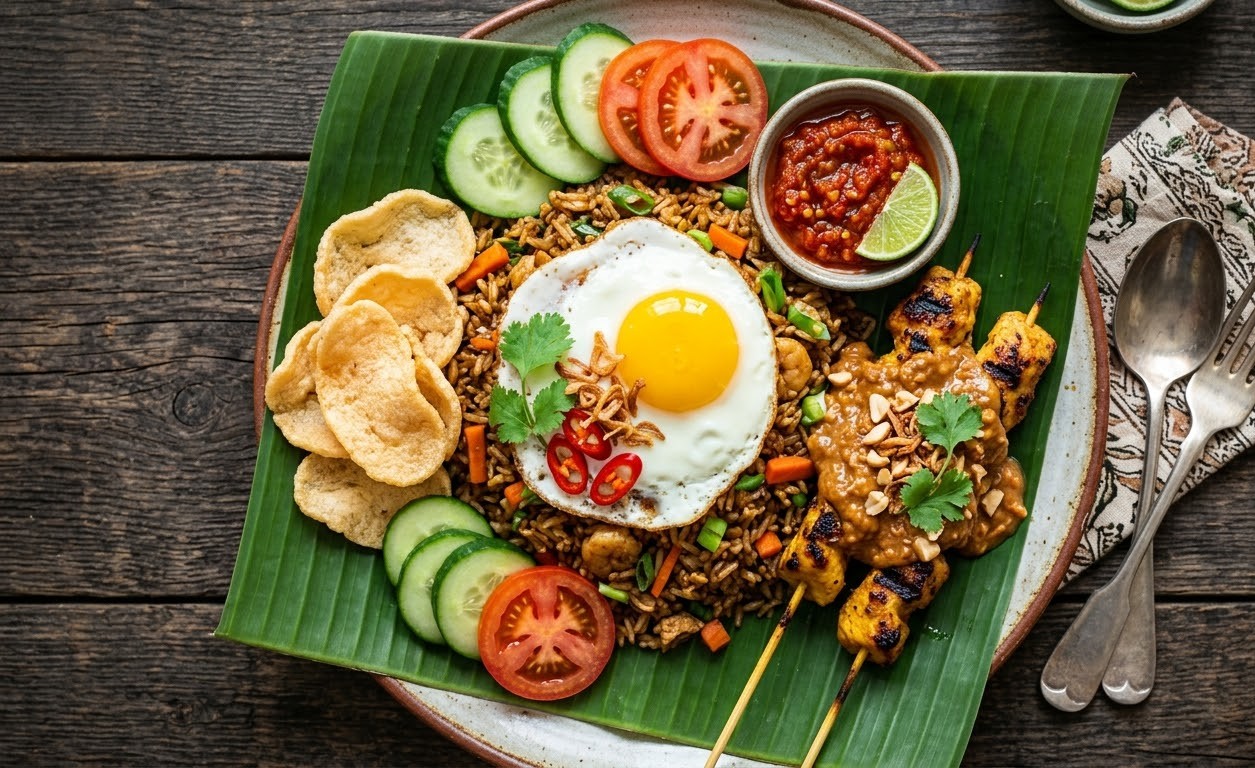
Authentic Balinese dining—enjoying local dishes like Nasi Goreng at family-run Warungs
Indian & Vegetarian Food Guide in Bali
Indian travelers will find a mature culinary landscape in Bali with excellent pure vegetarian, Jain, and authentic Indian options across major tourist hubs.
Top Indian Restaurants in Bali
For familiar comfort food, visit Ganesha Ek Sanskriti in Ubud and Kuta, Queen's Tandoor in Seminyak, Punjabi Grill in Kuta, or The Indian Cafe in Ubud. These spots offer North and South Indian specialties including Dal Makhani, Paneer Butter Masala, Dosas, and Thalis.
Jain & Strict Vegetarian Survival Strategies
Jain travelers can request meals prepared without onion, garlic, or root vegetables at established Indian restaurants. At local Balinese Warungs, use the phrase "Saya vegetaris, tanpa daging, ayam, seafood, atau telur" (I am vegetarian, no meat, chicken, seafood, or egg). Also specify "tanpa terasi" to ensure sambal sauces contain no shrimp paste. Popular dishes include Nasi Goreng Vegetaris, Mie Goreng Vegetaris, and Gado-Gado (steamed vegetable peanut salad). If you enjoy exploring culinary destinations across Asia, read our Penang travel guide.
Essential Bali Packing Checklist & Practical Veteran Advice
Packing Essentials for Indian Tourists
- Clothing & Temple Attire: Lightweight breathable cottons/linens, swimwear, UV rash guards, and a light sarong or scarf for temple entries.
- Electronics: Universal plug adapters (Indonesia uses Type C and Type F two-pin round sockets), power bank, and waterproof phone pouches for Nusa Penida boat trips.
- First Aid & Health: Activated charcoal tablets, ORS packets, mosquito repellent spray, and prescription medications. Never drink tap water directly; use bottled or filtered water.
Cash, Forex Cards & SIM Cards
Carry $200–$300 USD in cash as emergency backup, and use a multi-currency Forex card or withdraw IDR directly from bank ATMs (BNI, Mandiri, BCA) upon landing. Indian UPI is not yet accepted at local merchants in Bali. For connectivity, purchase a local Telkomsel Tourist SIM or an eSIM online before departure instead of buying heavily marked-up SIMs inside the airport arrival hall.
Publishing Disclaimer: Information verified against official guidelines from the Indonesian Directorate General of Immigration, Love Bali Provincial Portal, Bank Indonesia, Ministry of Home Affairs Indonesia, and the Consulate General of India in Bali. Visa requirements, tourist levies, and currency exchange rates are subject to updates.
Frequently Asked Questions
How much will a Bali trip cost from india?expand_more
A standard 7-day trip to Bali generally costs between ₹40,000 and ₹58,000 per person for budget-conscious travelers. If you prefer mid-range to luxury comfort—including direct flights, premium 4-star hotels or private pool villas, private driver tours, and dining at upscale beach clubs—the budget scales from ₹85,000 to ₹1,35,000+ per person.
Which country is Bali in?expand_more
Bali is a province of Indonesia, a large archipelagic nation located in Southeast Asia. It is an independent island territory situated between the islands of Java and Lombok, and its provincial capital city is Denpasar.
Is Bali visa free for Indians?expand_more
No. Indian passport holders need a Visa on Arrival to enter Bali. You can either apply online before you travel for an e-VOA (B213) through the official Indonesian Immigration portal, or buy a physical Visa on Arrival at the airport counter when you land. Both cost IDR 500,000 (around ₹2,700) and allow a stay of up to 30 days, extendable exactly once for a further 30 days. Applying for the e-VOA at least 48 hours before departure is worth it — it lets you skip the airport payment queue and head straight to the automated Autogates, which can save close to an hour.
Is Bali cheaper than Thailand?expand_more
Bali and Thailand have very similar overall travel costs, but they offer value in different areas. Thailand is generally cheaper for budget street food, local public transportation, and internal domestic flights. However, Bali offers much better value for luxury accommodations, allowing you to book premium private pool villas for a fraction of what they would cost in Thailand's resort hubs like Phuket.
Is Bali very expensive?expand_more
No, Bali is not expensive and stands out as one of the most budget-friendly international destinations for Indian travelers. Because the Indian Rupee holds strong purchasing power against the Indonesian Rupiah (1 INR ≈ 180+ IDR per Bank Indonesia), daily expenses like eating at local restaurants (warungs), hiring private tour drivers, and enjoying traditional spa massages are highly affordable.
Is Bali in India or Indonesia?expand_more
Bali is in Indonesia, not India. It is one of Indonesia's 38 provinces — an island in Southeast Asia sitting between Java to the west and Lombok to the east, with the Bali Sea to the north and the Indian Ocean to the south. The confusion is understandable, because Bali's Hindu temples, Ramayana and Mahabharata imagery, Ganesha statues and Sanskrit-rooted place names closely mirror Indian traditions. But there is no island, state, union territory or district called Bali anywhere inside India. Indian passport holders reach it on an international flight and clear Indonesian immigration on arrival at Denpasar.